
What to Look for in a Print Shop for Branded Merchandise in Australia
Choosing the right print shop for branded merch? Learn what Australian businesses and sports clubs should look for before placing an order.

Written by
Dane Santos
Branding & Customisation
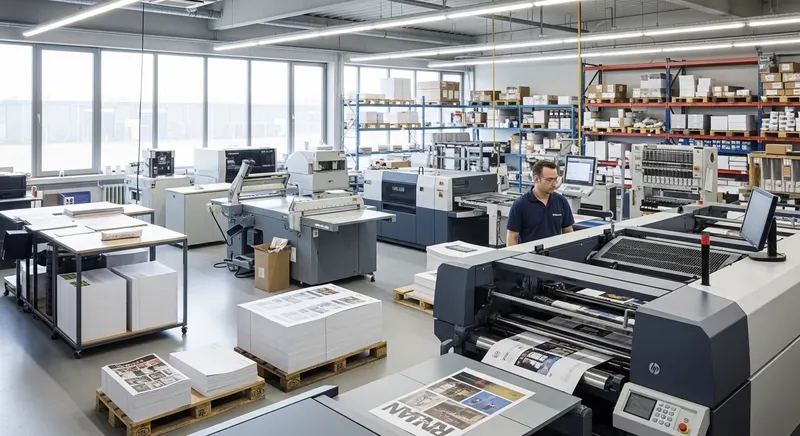
Finding the right print shop for your branded merchandise can feel overwhelming — especially when you’re juggling tight deadlines, limited budgets, and the pressure of getting your brand looking sharp across dozens (or even hundreds) of products. Whether you’re a marketing manager in Sydney preparing for a major conference, a sports club in Brisbane ordering custom jerseys for the season, or a small business in Perth putting together a corporate gift pack, the print shop you choose will have a direct impact on the quality, consistency, and cost of your final product. This guide walks you through everything you need to know before placing an order, so you can make a confident, informed decision.
What Does a Print Shop Actually Do?
The term “print shop” covers a much broader range of services than most people realise. While some operate primarily as document or signage printers, others — particularly those specialising in branded merchandise — offer a full suite of decoration services across apparel, accessories, drinkware, bags, and more.
A merchandise-focused print shop will typically offer several core decoration methods:
- Screen printing — ideal for bold, high-volume apparel orders like custom t-shirts and hoodies
- Embroidery — a premium finish suited to branded work polo shirts and corporate caps
- Sublimation printing — perfect for all-over colour designs on synthetic fabrics
- Pad printing — commonly used on pens, USB drives, and small promotional items
- Laser engraving — gives a professional, permanent finish on drinkware, metal products, and awards
- Digital printing — versatile and cost-effective for shorter runs or complex multi-colour artwork
Understanding which decoration method suits your product is half the battle. A print shop that can advise you on the right technique for your artwork and product combination is worth its weight in gold. If you’re unsure about your artwork format before approaching a printer, start by reading our guide on what a vector art file is and why it matters — it’ll save you a lot of back-and-forth.
Key Qualities to Look for in a Print Shop
Not all print shops are created equal. Here’s what separates a reliable, quality-focused print shop from one that’ll leave you with a headache (and substandard merchandise).
1. Decoration Method Expertise
The best print shops don’t just offer one or two methods — they have genuine expertise across multiple techniques and can guide you toward the best option for your product, budget, and artwork. For example, if you’re producing custom tote bags for a Melbourne council’s sustainability event, you’ll want a shop experienced in both sublimation and screen printing so they can advise on colour vibrancy, durability, and cost trade-offs. Explore the range of options available for tote bags and bags to get a sense of how decoration method affects the finished product.
2. Minimum Order Quantities That Match Your Needs
MOQs (minimum order quantities) vary significantly between print shops. Some require a minimum of 50 or 100 units per design; others can accommodate runs of 10–20 items. If you’re a sports club ordering wristbands for a single event, you need a shop that won’t lock you into buying 500 units you don’t need. Before approaching a printer, have a realistic sense of your quantity requirements — and check their wristbands and event wristband options to understand standard MOQs in that product category.
3. Turnaround Times and Rush Order Capability
Turnaround times in Australian print shops typically range from 7 to 15 business days for standard orders. Rush jobs can sometimes be turned around in 3–5 business days, though this usually comes at a premium. Always confirm lead times upfront, particularly if you’re producing merchandise for a fixed event date. A good print shop will be transparent about their production schedule and flag any potential delays early.
If you’re unsure whether to request a physical sample before committing to a full run, our comparison of virtual proofs versus physical samples is well worth reading before you finalise your order.
4. Artwork Support and File Requirements
Great print shops offer artwork support — they’ll work with your files, advise on modifications, and flag issues before production begins. Common requirements include vector files (AI, EPS, or PDF format), specific resolutions for digital prints, and PMS colour matching for brand consistency. If your files aren’t print-ready, a good shop will either fix them for a fee or direct you to appropriate resources. Knowing what a vector art file is before you submit your artwork will make the entire process smoother.
5. Product Range Breadth
A well-rounded print shop will carry or source products across multiple categories — not just t-shirts. Think branded drinkware, USB drives, bags, signage, and seasonal items. This matters because campaign consistency is so much easier when one supplier handles multiple product types. For example, a trade show kit might include custom USB promotional drives, tear-drop banners, and branded totes and backpacks — all ideally sourced from a single reliable print shop partner.
Questions to Ask Before You Commit
Before signing off on a quote, it pays to ask the right questions. Here’s a practical checklist to run through:
- What’s your turnaround time for my product and quantity? Don’t assume — always confirm.
- Can I see a proof before production begins? Both digital and physical proofs protect you from costly errors.
- What are your setup fees? Screen printing, for instance, often includes a setup fee per colour — this adds up quickly on small orders.
- Do you offer PMS colour matching? Critical for businesses with strict brand guidelines.
- What’s your policy on reprints or defects? A reputable shop will have a clear policy if something goes wrong.
- Do you ship Australia-wide? If you’re based in Darwin or Hobart but your print shop is in Sydney, confirm their freight partners and costs.
Matching the Print Shop to Your Merchandise Type
Different projects call for different specialists. Here’s a quick breakdown of how to match your project to the right type of print shop.
Corporate Gifting and Branded Merchandise
For corporate gift campaigns — think end-of-year gifts, client appreciation packs, or conference merchandise — you’ll want a print shop with a diverse product catalogue and strong finishing capabilities. Look for suppliers who can handle Christmas gifts for employees, branded drinkware, and tech accessories all under one roof.
For products like water bottles, always check material safety too. If you’re sourcing branded bottles in bulk, understanding what BPA is and choosing BPA-free options is increasingly important for corporate buyers with health and sustainability considerations.
Apparel and Sports Club Merchandise
Sports clubs across Australia — from AFL clubs in Adelaide to netball associations in Canberra — often need high-volume, durable apparel. Look for a print shop with sublimation or screen printing expertise for jerseys and t-shirts. Beyond jerseys, clubs often need accessories like gym towels and event wristbands. A print shop experienced in sports merchandise will understand the unique demands of this space, including team colour consistency and fast turnaround windows around season starts.
When designing your club’s custom apparel, understanding the fundamentals of t-shirt graphic design will help you create artwork that translates well into print.
Events, Expos, and Conferences
For events, you’ll often need a mix of printed items — from signage and banners to giveaways and branded accessories. A print shop that can handle wholesale umbrellas and novelty USB flash drives alongside apparel gives you a single point of contact for your entire event merchandise kit.
If you’re running a winter event in Sydney or Melbourne, seasonal product selections matter too. Our round-up of winter promotional products in Sydney is a great starting point for building an event merchandise list that’s appropriate for the season.
Red Flags to Watch Out For
Even experienced buyers can get caught out. Watch for these warning signs when evaluating a print shop:
- No proof process — Any shop that goes straight to production without approving artwork is a risk.
- Vague lead times — “A few weeks” isn’t good enough. Get specific dates in writing.
- No clear returns or defect policy — Without this, you have no recourse if the quality falls short.
- Very low prices with no explanation — Unusually low quotes often mean compromised materials, lower-grade inks, or outsourced offshore production with inconsistent quality control.
- No examples of past work — Ask for a portfolio or case studies. Reputable shops are proud of their work and happy to share it.
If you’re ever unsure about finding a reliable local option, our guide on where to print documents and merchandise near you can help you navigate local versus online options.
Conclusion: Choosing the Right Print Shop Sets Your Brand Up for Success
The right print shop is more than just a vendor — it’s a partner in your brand’s presentation. From a Gold Coast real estate agency ordering branded polo shirts to a Canberra government department producing conference merchandise, the quality and consistency of your branded products says a great deal about your organisation.
Here are the key takeaways to keep in mind:
- Know your decoration method — different products and designs require different printing techniques, and the best print shops will guide you through this decision.
- Clarify MOQs and turnaround times upfront — this avoids costly surprises and missed deadlines.
- Ensure your artwork is print-ready — vector files and correct colour specifications will save time and money.
- Ask the right questions before committing — proofs, setup fees, defect policies, and PMS matching are all essential considerations.
- Choose breadth and expertise over price alone — a print shop that can handle multiple product categories with consistent quality is far more valuable than the cheapest option on the market.
Take the time to vet your print shop properly, and your next branded merchandise project — whatever the scale — will be a whole lot smoother from start to finish.