
How to Choose the Right Promo Brands Strategy for Your Business in 2026
Discover how to build a winning promo brands strategy in 2026 — from product selection to decoration methods and budget tips for Australian businesses.

Written by
Dane Santos
Branding & Customisation
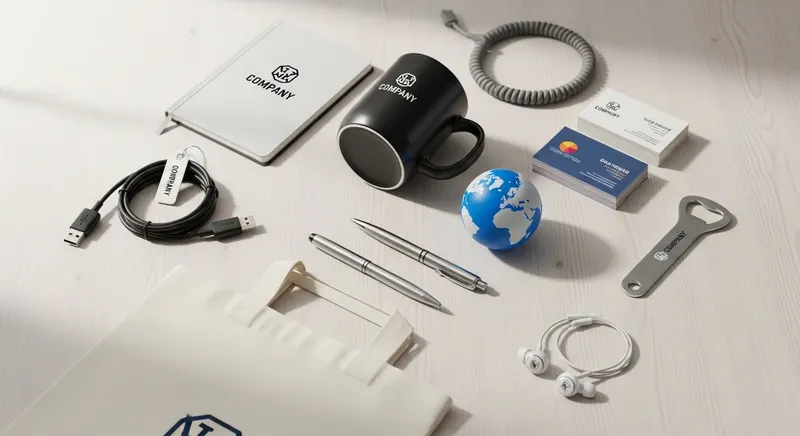
Building a recognisable brand doesn’t happen overnight — but the right promotional products can dramatically accelerate the process. Whether you’re a Sydney-based marketing manager preparing for a major trade show, a Melbourne footy club kitting out its volunteer team, or a Brisbane startup wanting to make a lasting impression at your next networking event, your choice of promo brands and branded merchandise will shape how people perceive your organisation for years to come. This guide breaks down everything you need to know about selecting, ordering, and maximising the impact of your promotional merchandise in 2026.
What Does “Promo Brands” Actually Mean?
The term “promo brands” is used in two distinct ways within the promotional products industry, and understanding the difference matters when you’re planning a merch campaign.
First, it refers to the brand identity you’re promoting — your own organisation’s logo, colours, and messaging applied to products that get distributed to customers, staff, event attendees, or supporters. Think a Perth council printing its logo on reusable tote bags for a community event, or a Canberra law firm embroidering its crest on polo shirts for the team.
Second, “promo brands” can refer to the product brands themselves — the underlying manufacturers or labels whose items you choose to print or embroider on. For example, when ordering custom drinkware, you might select from various quality tiers of bottles or cups. Understanding [what’s in your water bottle materials]((/what-is-bpa/) and the safety implications of certain plastics — like [bisphenol A]((/what-is-bisphenol-a/) — is genuinely important when evaluating product quality.
Both interpretations matter. Choosing high-quality branded products ensures your logo lands on items people actually want to use — which is the entire point.
Why Product Quality Matters for Your Brand Reputation
Here’s a truth that catches many organisations off guard: a cheap, poorly made promotional product can do more damage to your brand than no product at all. If a branded pen breaks after one day, or a tote bag’s stitching falls apart, the recipient’s association with your logo becomes negative.
This is why seasoned marketing teams treat promotional product sourcing the same way they treat any brand asset — with care, intention, and quality benchmarks.
Matching Product Quality to Brand Positioning
A luxury real estate agency in Double Bay wouldn’t hand out flimsy plastic bags at an open home. A premium financial services firm in Melbourne’s CBD would expect their branded drinkware to look and feel premium. Your merchandise should reflect the quality positioning of your brand.
Conversely, a grassroots sporting club in Adelaide running a community fundraiser has different needs — high-value-per-dollar items that stretch a tight budget across a large supporter base. Both approaches are valid. The key is alignment.
When evaluating products, ask yourself:
- Does this item reflect our brand’s values and positioning?
- Will the recipient actually use it (and therefore keep seeing our logo)?
- Is the decoration method suited to the item and our artwork?
- Does the quality justify the per-unit cost?
Popular Product Categories for Australian Promo Brands Campaigns
Promotional products span an enormous range of categories. Knowing what works for different objectives helps you avoid wasting your budget. Here are the most effective product types Australian organisations are using right now.
Apparel
Custom apparel remains one of the most powerful promo brands vehicles available. T-shirts, polos, and caps turn every wearer into a walking billboard. For sporting clubs, a [custom work polo shirt]((/work-polo-shirt/) creates a professional, unified look for coaches and officials. Event teams in every state from Darwin to Hobart rely on printed tees to identify staff at festivals, markets, and expos.
When considering custom tees, it’s worth understanding [tee shirt graphic options and decoration methods]((/tee-shirt-graphic/) to ensure your artwork is applied using the most suitable technique. Screen printing, sublimation, and heat transfer all behave differently depending on the garment material and design complexity.
One important sourcing note: many marketers ask about offshore manufacturing options. If you’re exploring cost structures for large runs, understanding [the realities of ordering custom t-shirts from Bali]((/t-shirts-bali/) can help set realistic expectations around quality, lead times, and minimum order quantities.
Bags and Totes
Bags offer exceptional brand exposure because they’re used repeatedly in public spaces. A well-designed tote can generate thousands of logo impressions over its lifetime. [Totes and backpacks]((/totes-and-backpacks/) are among the most versatile promo brands products — equally at home at a conference, a school fête, or a corporate onboarding pack.
For eco-conscious organisations — and there are plenty in Melbourne, Adelaide, and the ACT — choosing [sustainable promotional products]((/sustainable-products/) made from recycled or organic materials adds an extra layer of brand values messaging.
Drinkware
Branded water bottles and keep cups are perennial favourites for good reason: people use them daily. Before selecting drinkware, it’s worth checking out [what the best water bottle brand options]((/whats-the-best-water-bottle-brand/) look like from a quality and customisation perspective. Stainless steel double-wall bottles, for example, tend to have excellent decoration results with laser engraving or pad printing.
Tech Products
USB drives, power banks, and phone accessories are crowd-pleasers at trade shows and expos. A [novelty USB flash drive]((/usb-flash-drive-novelty/) shaped like your product or mascot creates a memorable, shareable moment. For more practical applications, standard [promotional USB drives]((/usb-promotional-drives/) offer consistent value at manageable MOQs — typically starting from 50 to 100 units.
Umbrellas
Often overlooked, branded umbrellas offer exceptional logo surface area and longevity. Particularly effective for outdoor events in Sydney and Brisbane where the weather can turn quickly, they’re worth exploring both for [wholesale umbrella ordering]((/wholesale-umbrellas/) and [umbrella wholesale pricing]((/umbrellas-wholesale/) options.
Event-Specific Merchandise
For events requiring crowd management or attendee identification, [wristbands for events]((/wrist-bands-events/) are a simple, cost-effective solution. [Custom wristbands]((/wristbands/) come in silicone, fabric, and Tyvek options, each suited to different event types and durations.
Decoration Methods: Getting Your Logo Right
Your choice of decoration method is just as important as your choice of product. The wrong technique can result in a logo that fades, cracks, or simply doesn’t look right on the item.
- Screen printing – Ideal for high-volume runs on apparel and flat surfaces. Bold, vibrant results.
- Embroidery – Professional and durable. Best for polos, caps, jackets, and bags.
- Laser engraving – Premium finish on metal, wood, and hard goods like drinkware and tech accessories.
- Pad printing – Standard for pens, small plastics, and irregularly shaped items.
- Sublimation – Full-colour, all-over coverage. Excellent for polyester apparel and custom towels.
- Digital printing – Suitable for low quantities with complex, full-colour designs.
Before committing to production, always clarify your artwork format. [Understanding vector art files]((/what-is-vector-art-file/) is essential — most decoration methods require a vector file (.AI, .EPS, or .PDF) to ensure sharp, scalable results at any size.
Proofing, Sampling, and Approval Processes
One of the most common mistakes organisations make when ordering promotional merchandise is skipping the proof stage. Whether you’re ordering 50 items or 5,000, taking the time to review your artwork in context prevents costly mistakes.
The [virtual proofs vs physical samples debate]((/virtual-proofs-vs-physical-samples-for-promotional-products/) is worth exploring in detail. Virtual proofs are faster and free; physical samples cost more and take longer but eliminate guesswork — particularly valuable for large or high-stakes orders.
For new suppliers or unfamiliar product categories, always request a pre-production sample where your budget allows.
Seasonal and Niche Promo Brands Opportunities
Timing your merch campaigns can significantly boost impact.
Winter merchandise is a smart play for organisations in cooler climates. Exploring [winter promotional products in Sydney]((/winter-promotional-products-in-sydney/) reveals a range of options — from branded beanies and scarves to custom umbrellas and insulated drinkware — that align with the season and deliver genuine utility.
Christmas gifts for employees represent one of the biggest annual merch purchasing moments. Choosing [thoughtful Christmas gifts for employees]((/xmas-gift-for-employees/) shows appreciation, reinforces company culture, and keeps your brand top of mind well into the new year.
Sports and fitness merchandise is booming. Custom [towels for gym use]((/towel-for-gym/) are increasingly popular with health clubs, sporting associations, and corporate wellness programs — functional, visible, and well-suited to sublimation decoration.
Outdoor events and displays often benefit from [teardrop banners]((/tear-drop-banner/) for wayfinding and brand visibility, giving your promo brands presence beyond just the merchandise itself.
Budgeting and Planning Your Promo Brands Campaign
A structured approach to budgeting prevents overspend and ensures your merchandise dollars work hard.
Key budget considerations include:
- Per-unit cost vs. total run cost – Bulk pricing tiers mean larger orders drive the unit cost down significantly
- Setup fees – Screen printing and embroidery typically involve one-off setup or digitisation fees per design
- Freight costs – Particularly relevant for organisations in WA, NT, and regional areas
- Turnaround buffer – Standard production typically runs 10–15 business days; express options cost more
- Sample budget – Allow for physical samples on larger or premium orders
A useful rule of thumb: the more reusable and visible the product, the higher a per-unit cost can be justified. A quality tote used for three years generates far more brand impressions per dollar than a disposable item.
Conclusion: Building a Stronger Brand Through Smart Promo Brands Choices
Getting your promotional merchandise strategy right is genuinely one of the most cost-effective marketing investments available to Australian organisations. From the product quality and decoration method you choose to your timing, budget, and proof approval process, every decision either strengthens or dilutes your brand equity.
Here are the key takeaways to carry forward:
- Quality over quantity — A smaller run of well-made, well-decorated products outperforms a large run of cheap giveaways in almost every scenario
- Match product to purpose — Align your merchandise choices with the event, audience, and brand values you’re trying to communicate
- Invest in artwork preparation — Vector files, proper colour matching, and thorough proofing prevent expensive reprints
- Plan for lead times — Budget and schedule for production, freight, and approval processes well in advance
- Think about product lifecycle — The longer an item gets used, the more brand impressions it generates, and the better value it represents
Promotional merchandise, done thoughtfully, doesn’t just hand out branded items — it builds genuine, lasting connections between your organisation and the people who matter most to it.