
How to Choose the Right Promotional Materials for Your Australian Business
Discover how to choose effective promotional materials for your business, sports club, or marketing campaign. Practical tips for Australian teams.

Written by
Sawyer Abara
Corporate Gifts
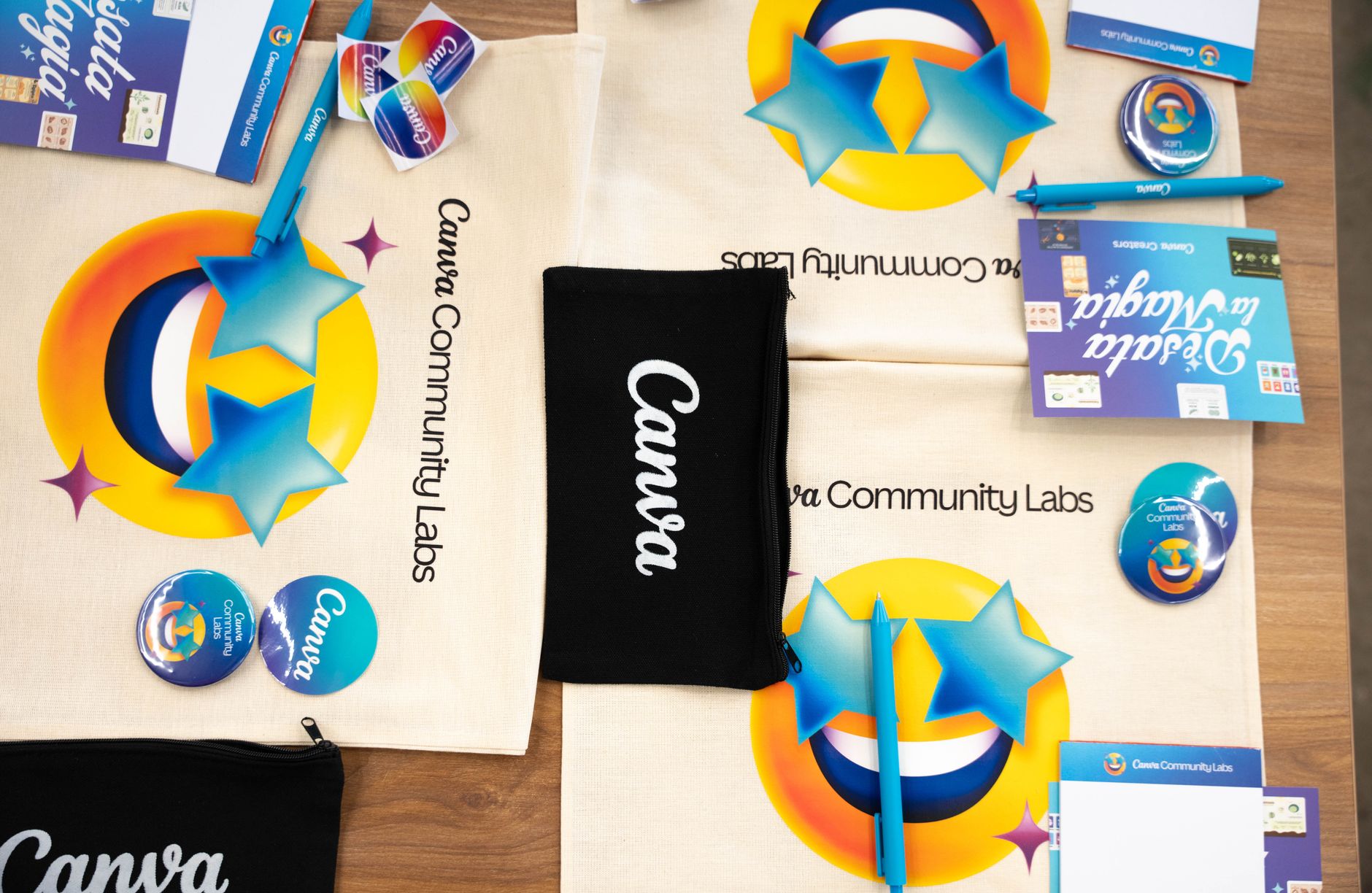
Choosing the right promotional materials can make or break your marketing efforts. Whether you’re a Sydney-based corporate team preparing for a major industry conference, a Melbourne sports club kitting out new members, or a Brisbane small business looking to build brand recognition, the products you put your name on say a lot about who you are. Get it right, and branded merchandise becomes a powerful touchpoint that keeps your brand top of mind long after the initial handout. Get it wrong, and you’ve spent budget on products that end up in the bin by the end of the day.
This guide walks you through everything you need to know to make smart, strategic decisions about promotional materials — from product selection and decoration methods to budgeting, timelines, and practical ordering tips.
What Are Promotional Materials and Why Do They Matter?
Promotional materials are physical, branded items given to customers, clients, staff, or supporters to raise awareness, build loyalty, and reinforce your brand identity. They span an enormous range of product categories — think custom apparel, branded drinkware, tote bags, tech accessories, stationery, lanyards, and much more.
The reason they remain such an enduring marketing tool is simple: they work. Unlike a digital ad that disappears from a feed in seconds, a quality branded water bottle or hoodie sticks around for months, even years. Every time someone uses that item, your brand gets seen — by the user and everyone around them. That’s repeated exposure with a single investment.
For Australian businesses, there’s also a practical advantage. With a strong trade show and events culture across cities like Melbourne, Sydney, and Perth, face-to-face moments create ideal opportunities to put branded merchandise directly into the hands of your target audience.
Understanding Your Audience Before You Order
Before you browse product catalogues or request a quote, take a moment to think carefully about who will actually be receiving your promotional materials. This single step will save you money and dramatically improve the effectiveness of your campaign.
Ask yourself:
- Who is my audience? Corporate executives, tradies, students, gym-goers, and sports club members all have very different needs and preferences.
- Where will these items be used? A product that works brilliantly at an outdoor expo in Queensland may not be the right fit for an indoor awards night in Canberra.
- What do I want people to feel? Premium, professional products communicate quality and respect. Fun, vibrant merchandise signals energy and approachability.
For example, a Perth mining company gifting branded merchandise to clients would likely lean towards premium items like engraved leather journals or quality insulated tumblers. A Gold Coast surf school handing out merchandise to junior participants might opt for bright, colourful rashie-style tees or drawstring bags. Knowing your audience shapes every decision that follows.
Choosing the Right Product Categories
With thousands of promotional materials available, it helps to think in categories. Here’s a breakdown of the most popular product types and when they work best.
Custom Apparel
T-shirts, polos, hoodies, and caps are perennial favourites for a reason — they turn your recipients into walking billboards. They’re especially effective for sports clubs, school events, trade shows, and staff uniforms. If you’re running a staff engagement initiative or team-building day, branded apparel creates a genuine sense of unity. Check out our guide to ordering custom team uniforms and everything you need to know about custom polo shirts for more detail.
Drinkware
Branded water bottles, keep cups, and insulated tumblers are among the highest-retention promotional items available. Australians are increasingly eco-conscious, and reusable drinkware aligns perfectly with that mindset. A well-made keep cup with your logo will be used daily, making it one of the best cost-per-impression investments in the promotional materials space. Read our guide to branded drinkware options to compare product types.
Bags and Totes
From cotton tote bags to premium conference satchels and cooler bags, branded bags get serious visibility. They’re ideal for events, real estate open days, corporate gifting, and university orientation weeks. A quality bag is carried in public, extending your brand’s reach far beyond the original recipient. For more on this, see our post on choosing the right branded bag for your event.
Tech Accessories
Power banks, USB drives, wireless chargers, and phone accessories are particularly well-received by corporate audiences and conference delegates. These items have high perceived value, which reflects positively on your brand. They do tend to sit at a higher price point, so they’re best suited to VIP gifting or high-value client relationships.
Stationery and Office Essentials
Branded pens, notebooks, lanyards, and mouse pads are low-cost, high-volume options that work well for trade shows, school fairs, and large-scale corporate campaigns. They’re practical, easy to distribute, and available in bulk at very competitive price points. Our guide to branded pens and stationery covers the key considerations here.
Decoration Methods: Getting Your Logo Right
Even the best promotional product falls flat if the branding looks poor. Understanding decoration methods helps you choose the right approach for each product and ensure your logo looks sharp.
- Screen printing is ideal for high-volume t-shirts and bags, delivering vibrant, durable results at a low cost per unit. Best for designs with limited colours. See our screen printing vs embroidery comparison for a full breakdown.
- Embroidery suits polos, caps, and premium apparel — it adds a professional, tactile quality that screen printing can’t replicate.
- Laser engraving is perfect for metal and leather items like water bottles, keyrings, and journals. It delivers a sophisticated, permanent result.
- Pad printing is the go-to for hard plastic items like pens and USB drives.
- Sublimation allows full-colour, edge-to-edge printing — ideal for sportswear, lanyards, and microfibre cloths.
Artwork requirements vary by decoration method, so always provide your logo in a vector format (AI, EPS, or high-resolution PDF) where possible. This ensures clean, scalable results regardless of the product size. Read more in our artwork preparation guide.
Budgeting for Promotional Materials
Budget is one of the most common sticking points for Australian marketing teams. Here’s a straightforward way to approach it.
Start by calculating your cost-per-recipient. If you’re attending a trade expo with 500 visitors, divide your total merchandise budget by 500 to understand what you can spend per person. A $1,500 budget gives you $3 per person — enough for a quality branded pen and a tote bag, or a single mid-range item like a ceramic mug.
Keep in mind:
- Setup fees apply to most decoration methods and cover the creation of screens, embroidery digitising files, or engraving templates. These are typically a one-off cost.
- Minimum order quantities (MOQs) vary widely — pens might have an MOQ of 100 units, while custom caps may start at 25 pieces.
- Bulk pricing tiers mean the unit cost drops significantly as your order quantity increases. Ordering 500 branded water bottles instead of 100 can reduce your per-unit cost by 30–40%.
- Express turnaround fees apply if you need items in under two weeks — always build in lead time where you can.
For context, standard turnaround for most promotional materials in Australia sits between 10 and 15 business days from artwork approval. If you’re based in Darwin or Hobart, factor in additional freight time to regional locations. You can explore our guide to promotional product lead times for a detailed breakdown.
Eco-Friendly Promotional Materials: A Growing Priority
Sustainability is no longer a niche concern for Australian organisations — it’s increasingly a core part of how businesses and institutions present themselves. Choosing eco-friendly promotional materials sends a clear message about your values and resonates strongly with environmentally conscious audiences.
Popular sustainable options include bamboo pens and stationery, recycled PET tote bags, reusable beeswax wraps, organic cotton apparel, and seed paper cards. An Adelaide council or a Canberra government department sourcing promotional materials for a community event would do well to prioritise these product lines. Read more in our guide to eco-friendly promotional products.
Practical Tips for a Smooth Ordering Process
Even experienced marketing professionals hit snags when ordering promotional materials. Here are some practical tips to keep things on track.
- Order samples first — especially for high-volume or high-value orders. A physical sample lets you assess quality, colour accuracy, and sizing before committing to a full run.
- Approve your proof carefully — check spelling, logo placement, and colour references (PMS codes) before signing off. Mistakes caught at proof stage are free to fix; mistakes after production are costly.
- Communicate your deadline upfront — give your supplier your actual in-hands date, not just when you want to place the order. This allows them to manage production and freight timelines accurately.
- Consolidate your orders — ordering multiple product lines from a single supplier often means better pricing and simpler project management.
- Store excess stock properly — if you’re ordering surplus promotional materials for future use, ensure items are stored in cool, dry conditions to maintain quality.
Conclusion: Key Takeaways for Choosing Promotional Materials
Promotional materials are one of the most tangible, lasting forms of marketing available to Australian businesses, sports clubs, and marketing teams. When chosen thoughtfully and produced to a high standard, they deliver genuine brand value well beyond a single event or campaign.
Here are the key takeaways to carry with you:
- Know your audience first — the right product for one group may be completely wrong for another. Align your product selection with who will receive it and where they’ll use it.
- Match your decoration method to your product — embroidery for apparel, laser engraving for metal, screen printing for high-volume fabric items. Getting this right ensures your logo looks its best.
- Build your timeline and budget early — factor in MOQs, setup fees, bulk pricing tiers, and freight time, particularly if you’re located outside a major metro area.
- Prioritise quality over quantity — a smaller number of high-quality promotional materials will leave a stronger impression than a large volume of cheap items that won’t last.
- Consider sustainability — eco-friendly options are increasingly expected by Australian audiences and can meaningfully reinforce your brand’s values.
With the right approach, your next promotional materials campaign can deliver impressions, goodwill, and brand recognition that digital marketing simply can’t replicate.