
How to Choose the Right Merchandise Supplier for Your Australian Business
Find the right merchandise supplier for your business, sports club, or marketing team. Expert tips on what to look for, red flags, and how to order.

Written by
Dane Santos
Branding & Customisation
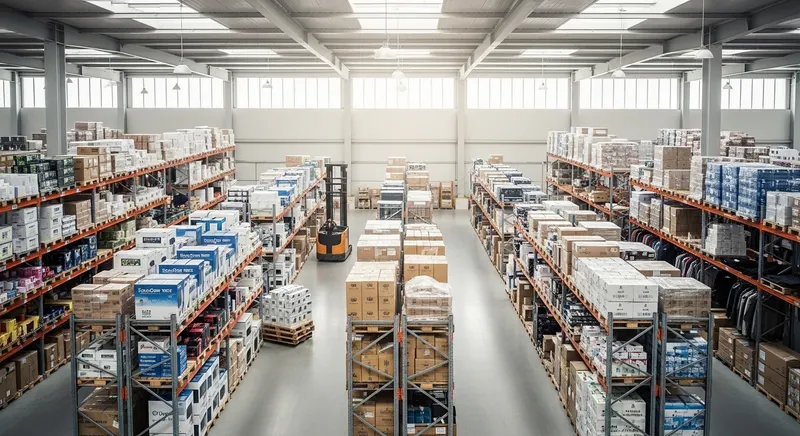
Choosing the right merchandise supplier can make or break your next branded product campaign. Whether you’re a marketing manager in Sydney preparing for a major product launch, a Brisbane sporting club ordering custom jerseys for the season ahead, or a Melbourne business sourcing corporate gifts for end-of-year, the supplier you work with will directly influence the quality of your products, the smoothness of your experience, and ultimately, how your brand is perceived. With so many options in the market, knowing what to look for — and what to avoid — is essential knowledge for anyone responsible for sourcing branded merchandise in Australia.
What Does a Merchandise Supplier Actually Do?
Before diving into how to choose one, it’s worth understanding what a quality merchandise supplier actually provides. At its core, a merchandise supplier sources, decorates, and delivers branded products on behalf of clients. But the best suppliers do significantly more than just print a logo on a product.
A professional merchandise supplier will offer:
- Product sourcing across a wide range of categories — from custom tote bags and backpacks to promotional USB drives and work polo shirts
- Artwork support — helping clients prepare or convert files into print-ready formats (understanding what a vector art file is is a great starting point for any marketer)
- Decoration and branding — applying your logo or design via screen printing, embroidery, sublimation, pad printing, or laser engraving depending on the product
- Quality control — checking products before dispatch to ensure colour accuracy, placement, and overall finish meet agreed standards
- Logistics and delivery — managing fulfilment across Australia, whether you’re in Perth, Darwin, Hobart, or anywhere in between
The distinction between a basic print shop and a full-service merchandise supplier is significant. If you need someone to simply reprint a document, that’s a different requirement entirely — our article on where to print documents near you covers that. But for branded merchandise campaigns, you need a partner who understands both product and brand.
Key Qualities to Look for in a Merchandise Supplier
Not all suppliers are created equal. Here’s what separates a reliable, professional merchandise partner from one that will leave you stressed and out of pocket.
1. Product Range and Expertise
A well-rounded supplier should offer products across multiple categories relevant to your needs. A marketing team planning a trade show in Adelaide, for example, might need tear-drop banners, branded wholesale umbrellas, event wristbands, and novelty USB drives — all from the one place. Working with a single supplier who can manage a diverse order simplifies your project, reduces communication overhead, and often unlocks better pricing.
If a supplier only specialises in one product type, you’ll likely find yourself juggling multiple vendors for larger campaigns, which creates unnecessary complexity.
2. Transparency Around Pricing, MOQs, and Setup Fees
One of the most common frustrations when sourcing branded merchandise is discovering hidden costs after the fact. A trustworthy merchandise supplier will be upfront about:
- Minimum order quantities (MOQs) — most screen-printed t-shirts, for instance, will have an MOQ of around 12–25 units, while some product categories require higher minimums
- Setup fees — screen printing and pad printing typically involve a one-time setup fee per colour, per position, so understanding this upfront helps you budget accurately
- Freight costs — especially if you’re ordering from interstate or requiring urgent delivery
Ask for a full itemised quote before committing to any order. If a supplier is vague about pricing or reluctant to provide a detailed breakdown, consider that a warning sign.
3. Proof Approval Process
Any reputable supplier will provide proofs before going into production. Understanding the difference between virtual proofs and physical samples is important here — both have their place depending on the size and complexity of your order.
For large orders, a physical pre-production sample is often worth the extra time and cost. It allows you to check the decoration placement, colour accuracy, and overall product quality before thousands of units are produced. For smaller or time-sensitive orders, a virtual proof reviewed carefully can suffice — but always make sure someone in your team checks it thoroughly before approving.
4. Knowledge of Decoration Methods
The best suppliers will guide you towards the most appropriate decoration method for your product and artwork. Embroidery, for instance, works beautifully on polo shirts and caps but isn’t suitable for photographic designs. Sublimation delivers full-colour, edge-to-edge prints and is ideal for sports jerseys and gym towels but requires a polyester substrate.
A knowledgeable supplier will ask the right questions about your artwork, your product, and your intended use — then recommend the best approach. If a supplier immediately suggests the cheapest method without considering these factors, that’s worth questioning.
5. Ethical Product Standards and Material Transparency
More and more Australian organisations — particularly government departments, universities, and health-focused businesses — are asking questions about material safety and sustainability. For drinkware products, for example, understanding what BPA is and what bisphenol A means for product safety is increasingly important. A responsible supplier will be able to confirm whether their drinkware products are BPA-free and provide relevant certification if required.
Similarly, for eco-conscious buyers — particularly councils and not-for-profits across Victoria and South Australia — a supplier with genuine sustainable product options and transparent sourcing is a significant advantage.
Red Flags to Watch Out For
Knowing what a good supplier looks like is only half the equation. Here are some warning signs that suggest you should look elsewhere.
- No physical samples available — a supplier who can only show you digital renders and won’t allow pre-production samples for large orders lacks confidence in their product quality
- Unrealistic turnaround promises — standard decorated merchandise typically requires 5–15 business days depending on complexity; any supplier guaranteeing overnight turnaround on large embroidered orders should raise eyebrows
- Vague artwork requirements — if they’re happy to accept low-resolution JPEG files for screen printing without flagging potential quality issues, your finished product may disappoint
- No PMS colour matching — for brand-sensitive orders, your supplier should be able to match your brand’s Pantone (PMS) colours accurately; if they’re not familiar with this process, your brand colours may print inconsistently
- Poor communication — slow response times during the quoting phase are a reliable indicator of how they’ll communicate once your order is in production and issues arise
Matching Your Supplier to Your Specific Campaign Needs
The best merchandise supplier for a Gold Coast events company might not be the best fit for a Canberra government department. It’s worth thinking carefully about your specific needs before committing.
For sporting clubs, look for suppliers with experience in performance apparel, sublimation printing, and sports accessories. A club ordering custom jerseys, event wristbands, and caps needs a supplier who understands tight seasonal deadlines.
For corporate marketing teams, you want a supplier who understands brand guidelines, can manage multiple SKUs, and has experience with larger, more complex orders — think graphic t-shirts, branded umbrellas, and employee Christmas gifts delivered reliably before the festive season.
For seasonal and regional campaigns, ask whether your supplier has experience with location-specific briefs. Winter in Sydney, for instance, requires a very different product mix to summer in Darwin — our article on winter promotional products in Sydney explores this in more detail.
Budget Planning with Your Merchandise Supplier
Once you’ve identified a shortlist of potential suppliers, budget planning becomes the next priority. A few practical considerations:
- Request tiered pricing — most suppliers offer better per-unit pricing at higher quantities; understanding where these break points are helps you optimise your order size
- Factor in freight — particularly if you’re distributing products across multiple locations, freight can be a meaningful cost line
- Plan for artwork preparation costs — if your artwork isn’t print-ready, there may be artwork setup fees; this is why understanding vector art formats matters
- Allow buffer time — rush fees can significantly increase costs, so building a realistic timeline into your campaign planning protects your budget
For reference, when evaluating branded water bottles, pricing can range from under $5 per unit for simple plastic bottles to $30+ for premium insulated stainless steel options, depending on brand, quantity, and decoration complexity. Having a clear per-unit budget before you start discussions helps your supplier recommend appropriate options quickly.
Building a Long-Term Supplier Relationship
The Australian businesses and sporting clubs that consistently produce outstanding branded merchandise share one thing in common: they’ve built lasting relationships with their merchandise suppliers rather than shopping around for the cheapest quote every time.
A supplier who understands your brand, knows your preferred decoration methods, holds your artwork on file, and understands your delivery requirements is an invaluable asset. Over time, this relationship translates into smoother orders, better advice, and often more competitive pricing.
Treat your merchandise supplier as a strategic partner, not just a vendor — and choose one who approaches the relationship the same way.
Key Takeaways
Choosing the right merchandise supplier is one of the most important decisions a marketing team, business, or sporting club can make for their branded merchandise programme. Here’s what to keep in mind:
- Look for range and expertise — a supplier who covers multiple product categories and decoration methods simplifies your campaigns and creates better outcomes
- Insist on transparency — clear pricing, upfront MOQs, setup fees, and freight costs should all be communicated before you commit to an order
- Prioritise the proof process — always review a virtual proof carefully, and request a physical sample for large or high-value orders
- Watch for red flags — vague artwork requirements, unrealistic turnarounds, and poor communication early in the process are reliable indicators of problems to come
- Think long-term — the best supplier relationships are built over time, and the value of a partner who truly understands your brand compounds with every campaign you run together