
How to Choose the Right Merch Suppliers for Your Australian Business or Club
Discover how to find and evaluate merch suppliers in Australia, with expert tips on quality, pricing, turnaround times, and decoration methods.

Written by
Annabel Romero
Industry Leadership
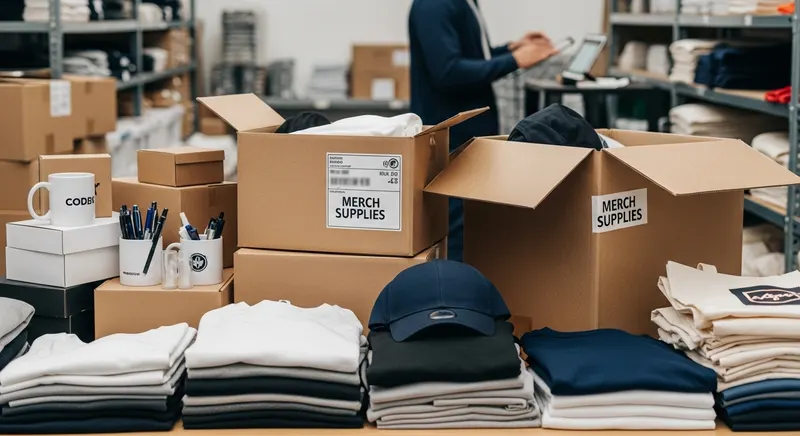
Finding the right merch suppliers can be the difference between a branded merchandise campaign that genuinely moves the needle and one that ends up gathering dust in a storage cupboard. Whether you’re a marketing manager in Melbourne sourcing conference giveaways, a Brisbane sports club coordinating uniforms for the upcoming season, or a Sydney-based business refreshing its corporate gifting strategy, the supplier you choose will shape every outcome — from product quality and print finish to delivery timelines and your overall budget. With so many options in the Australian market, it pays to know exactly what to look for before you commit.
What Do Merch Suppliers Actually Do?
Before diving into how to evaluate them, it’s worth understanding what a merchandise supplier actually provides. In the Australian context, merch suppliers are businesses that source, stock, or manufacture promotional products and branded merchandise, then apply custom decoration (your logo, tagline, or artwork) before dispatching to you or your end recipients.
Some suppliers operate as full-service agencies, handling everything from product sourcing to design consultation, artwork preparation, sampling, proofing, and fulfilment. Others function more as wholesale distributors — offering extensive product catalogues at competitive unit pricing, with decoration handled in-house or via a network of trusted print and embroidery partners.
Understanding this distinction matters because it affects how much hands-on support you’ll receive. A full-service supplier suits organisations that want guidance throughout the process. Wholesale-style suppliers, on the other hand, are ideal for experienced buyers who know exactly what they want and are comfortable managing the production brief themselves.
Key Factors to Evaluate When Comparing Merch Suppliers
Product Range and Category Depth
Not all suppliers carry the same product categories, and this can significantly affect your ability to run a cohesive merchandise campaign. Look for suppliers that stock a broad range across popular categories — custom apparel, drinkware, bags, tech accessories, stationery, and outdoor gear.
For example, a marketing team planning an outdoor activation might need branded umbrellas at wholesale pricing alongside custom tote bags and backpacks and even SPF50 sunscreen as a functional giveaway. If your supplier can’t deliver all of these under one roof, you’re juggling multiple vendors, multiple invoices, and multiple delivery schedules — a logistical headache that compounds quickly under tight event timelines.
Sports clubs should prioritise suppliers with strength in apparel. The ability to produce sublimated polo shirts and custom work polo shirts with full-colour, all-over prints is critical for clubs seeking a premium uniform look. Equally important is whether the supplier can handle wristbands and other team identity items in the same order.
Decoration Methods and Print Quality
The decoration method used on your merchandise directly affects how the final product looks, feels, and holds up over time. Reputable merch suppliers will be transparent about which methods they use for different product types and will advise you on the most suitable option for your artwork and application.
Common decoration methods include:
- Screen printing – Best for bold, high-volume runs on flat surfaces like t-shirts and tote bags
- Embroidery – Ideal for caps, polos, and jackets where a premium, textured finish is desired
- Sublimation – Perfect for full-colour, all-over prints on polyester apparel and sportswear
- Laser engraving – A popular choice for metal drinkware, pens, and tech accessories
- Pad printing – Common for small-surface items like pens and USB drives
- Digital/DTG printing – Great for short runs with complex, multi-colour artwork on garments
A quality supplier will also walk you through artwork requirements — file formats, resolution, colour matching via PMS references — to ensure your branding is reproduced accurately. Ask specifically about their approach to virtual proofs versus physical samples before placing large orders. For high-value or high-volume runs, a physical pre-production sample is always worth the extra lead time.
Minimum Order Quantities (MOQs) and Pricing Structure
MOQs vary significantly across suppliers and product types. Standard branded pens might have an MOQ as low as 50 units, while custom apparel orders often start at 25–50 pieces minimum, and more specialised items like novelty USB flash drives or promotional USB drives may require 100 units or more.
Understanding MOQs upfront prevents budget blow-outs and helps you plan your stock quantities sensibly. Equally important is understanding the pricing tier structure — most suppliers offer volume discounts, where the unit price drops meaningfully once you cross certain quantity thresholds. A Perth business ordering 100 branded polo shirts will pay considerably more per unit than one ordering 500, so if budget is a priority, consolidating orders (even across departments or events) often pays off.
Don’t overlook setup fees. Most suppliers charge a one-off fee to prepare artwork files for screen printing, embroidery digitisation, or engraving setup. These fees are typically per colour, per position, or per design, and can add meaningful cost to smaller runs.
Turnaround Times and Reliability
Turnaround times in Australia vary based on whether products are locally stocked, imported from offshore, or manufactured to order. Standard lead times for most decorated merchandise sit between 7 and 15 business days from artwork approval. Rush orders — typically 2–5 business days — are available with many suppliers but usually attract a surcharge.
Offshore production is a reality for some product types, particularly graphic tee shirts or more specialised custom apparel. Some businesses actively source t-shirts from Bali for event merchandise due to cost advantages on larger runs, though this adds significant lead time and requires careful quality management.
Always build buffer time into your project plan. If your conference is on a fixed date, work backwards from that date and communicate your deadline clearly with your supplier from the very first conversation. The best merch suppliers will flag potential risks proactively — not after your deadline has passed.
Sustainability and Ethical Sourcing: An Increasingly Important Consideration
Australian businesses and marketing teams are under growing pressure — from stakeholders, clients, and their own staff — to make more responsible procurement choices. Reputable merch suppliers increasingly offer sustainable and eco-friendly product ranges, from recycled material bags and bamboo stationery to reusable drinkware alternatives.
When evaluating a supplier’s sustainability credentials, ask about:
- Whether products carry recognised environmental certifications
- Their factory auditing and ethical sourcing practices
- Whether their packaging is recyclable or compostable
- The longevity and durability of the products (a merchandise item used daily for years is far more sustainable than a throwaway giveaway)
It’s also worth checking what materials are used in drinkware, particularly for bottles and cups. Products made with BPA can raise health concerns — understanding what BPA is and knowing what Bisphenol-A means for your branded drinkware is essential when selecting products that will be used for food and beverage consumption. A quality supplier will be able to confirm BPA-free status for all relevant items in their catalogue.
Specialist Needs: Seasonal and Niche Merchandise
The best merch suppliers will also be able to support you across seasonal campaigns and niche product requirements. A retailer or HR team planning Christmas gifts for employees needs a supplier with strong gifting options and the capacity to handle individual packaging and fulfilment. A Hobart gym or Adelaide fitness brand might be looking for branded gym towels or custom wholesale umbrellas for outdoor event days.
For seasonal campaigns — think winter promotional products for a Sydney-based campaign or summer outdoor activations — suppliers who plan their stock well in advance are far more reliable than those who treat seasonal merchandise as an afterthought.
Red Flags to Watch For
Even with strong suppliers in the market, there are warning signs that should give you pause:
- Vague or evasive answers about product origins, factory conditions, or decoration processes
- No physical sample option for large or high-value orders
- Unusually low pricing that seems too good to be true — often a sign of inferior product quality, substandard print, or unreliable fulfilment
- Poor communication — slow email responses, unclear quoting processes, or difficulty getting a straight answer on MOQs and lead times
- Limited or outdated product catalogues — a supplier that hasn’t refreshed their range in years may not be across current market trends or quality benchmarks
Building a Long-Term Supplier Relationship
The most effective merchandise programs in Australia aren’t built on one-off transactions — they’re built on ongoing supplier relationships. When you find a supplier that understands your brand, your audience, and your operational requirements, the value of that relationship compounds over time.
A marketing team that works consistently with the same supplier benefits from faster turnarounds (no re-briefing every time), better pricing as order volumes accumulate, and a supplier that proactively suggests new products and innovations that fit your objectives. Don’t underestimate the value of a supplier who picks up the phone, knows your name, and takes ownership when something goes wrong.
Conclusion: What to Take Away When Evaluating Merch Suppliers
Finding the right merchandise supplier takes more than a quick Google search. The most successful outcomes come from doing your due diligence, asking the right questions, and treating the supplier selection process as a genuine business decision. Here are the key takeaways:
- Breadth of product range matters — look for suppliers who can support multiple categories so you’re not managing fragmented vendor relationships
- Understand decoration methods — the right print or embellishment technique for your product type directly affects quality and longevity
- Clarify MOQs, pricing tiers, and setup fees upfront to avoid budget surprises
- Turnaround times and reliability are non-negotiable — always communicate your deadline early and build in buffer time
- Sustainability credentials are increasingly important — ask about ethical sourcing, certifications, and BPA-free materials for drinkware
- Long-term supplier relationships pay dividends — consistency, trust, and shared knowledge of your brand make every subsequent campaign smoother and more effective
Investing time in finding the right merch suppliers now will save you significant stress, cost, and disappointment down the track — and position your branded merchandise program for long-term success.