
Custom Branding Apparel: The Complete Guide for Australian Businesses and Sports Clubs
Discover how to choose, order, and maximise custom branding apparel for your Australian business, marketing team, or sports club in 2026.

Written by
Cleo Wright
Custom Apparel
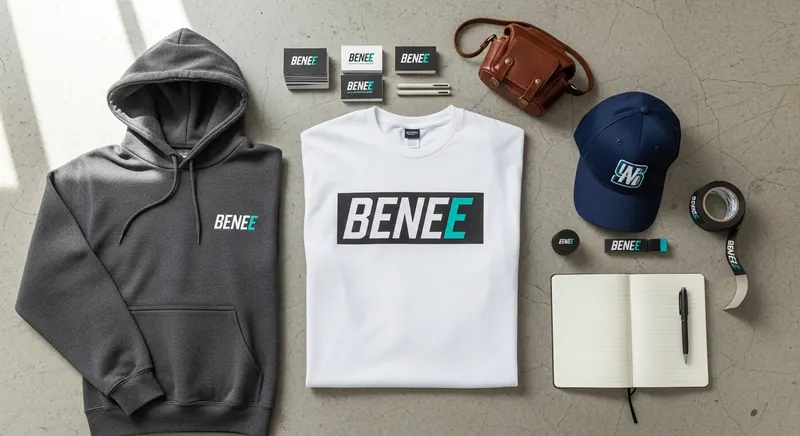
There’s a reason custom branding apparel remains one of the most popular promotional investments for Australian organisations of all shapes and sizes. Whether you’re outfitting a sales team heading to a Sydney trade show, kitting out a Gold Coast footy club, or launching a staff uniform refresh for a Perth retail chain, branded clothing does something that a brochure or digital ad simply cannot — it turns your people into walking, talking brand ambassadors. The challenge, of course, is knowing where to start. Decoration methods, fabric choices, minimum order quantities, turnaround times — there’s a lot to consider before you place that first order. This guide breaks it all down so your next apparel project goes smoothly from artwork to delivery.
Why Custom Branding Apparel Is Worth the Investment
Let’s be direct: branded clothing isn’t cheap when done properly, but the return on investment is difficult to argue with. A quality embroidered polo shirt or a well-designed screen-printed t-shirt gets worn repeatedly — in public, at the gym, on the weekend — extending your brand’s reach far beyond any single interaction.
Research consistently shows that wearable promotional products have some of the longest retention rates of any branded item. Unlike a flyer or a digital banner that disappears in seconds, a hoodie with your logo gets thrown on every winter morning. For a Melbourne-based business running a team of 40 staff, that’s 40 people representing your brand every single day they wear their uniform. Scale that up across a year, and the brand impressions become significant.
Beyond exposure, custom apparel also builds internal culture. Teams that wear coordinated branded clothing tend to feel a stronger sense of identity and belonging — something that’s particularly valuable for sports clubs, healthcare organisations, and corporate businesses with large workforces spread across multiple locations.
Understanding Your Decoration Options
One of the first decisions you’ll face with custom branding apparel is how your logo or design will actually be applied to the garment. Each decoration method has its strengths depending on your design complexity, garment type, and budget.
Embroidery
Embroidery is the go-to for a premium, professional finish — particularly on polo shirts, caps, and fleece jackets. It’s ideal for corporate uniforms, real estate agencies, and healthcare teams where a polished appearance matters. The downside is that it’s not suited to highly detailed artwork or photographic images, and it can feel heavy on lightweight fabrics.
Screen Printing
Screen printing is the workhorse of the apparel decoration world. It delivers bold, vibrant colours at a cost-effective price point, especially when ordering in volume. It works brilliantly on cotton and cotton-blend t-shirts. If your design has a limited number of colours and you’re ordering 50 pieces or more, screen printing is hard to beat. Check out our detailed guide to t-shirt graphic design and printing options to understand how to prepare your artwork for this process.
Heat Transfer and Digital Printing (DTG)
Direct-to-garment (DTG) printing allows for full-colour, photographic-quality images on fabric. It’s well-suited to smaller runs where screen printing setup fees would be prohibitive. Heat transfer vinyl (HTV) is another option popular with sports clubs for numbering and player names on jerseys.
Sublimation
Sublimation printing bonds ink directly into the fabric fibres, resulting in vibrant, full-coverage designs that won’t crack or fade. It’s the standard choice for custom sports jerseys, activewear, and garments where an all-over print is desired. Note that sublimation only works on polyester or polyester-blend fabrics.
Choosing the Right Garments for Your Audience
Not all branded apparel serves the same purpose. Understanding what will actually get worn — and where — is crucial to making the right product selection.
Corporate and Business Teams
For professional environments, embroidered polo shirts are the classic choice. They strike the right balance between formal and casual, and they photograph well for team headshots and company directories. If you’re building out a full corporate uniform package, consider combining a branded work polo shirt with complementary items like caps, bags, or outerwear.
Sports Clubs and Associations
Sports clubs across Brisbane, Adelaide, and Melbourne consistently turn to sublimated jerseys, training tees, and custom caps. The key here is durability — garments need to handle repeated washing, physical activity, and outdoor conditions. For smaller clubs on tighter budgets, screen-printed cotton training shirts are a practical and cost-effective starting point.
If your club is running an event, pairing apparel with accessories like event wristbands or event wristbands for access management creates a more complete branded experience for participants.
Marketing Teams and Events
Marketing teams need flexibility. You might need a batch of branded shirts for a conference in Canberra one month, and a run of hoodies for a product launch activation in Melbourne the next. For event-focused apparel, screen printing typically offers the best combination of speed and cost. Consider also how your branded clothing will work alongside complementary promotional items — custom tote bags and backpacks are natural companions to an apparel order and help create a cohesive brand pack for attendees.
Getting Your Artwork Right
Poor artwork is the number one cause of delays and disappointment in custom apparel projects. Before you submit your logo or design for production, make sure you understand the format requirements.
Most decoration suppliers require vector files — typically .AI, .EPS, or .PDF formats — for embroidery and screen printing. Raster files (JPGs, PNGs) are not suitable for these processes as they lose quality when resized. If you’re unsure what format your logo is in, our explainer on what a vector art file is is a great starting point.
PMS (Pantone Matching System) colour codes are also important if precise brand colour matching matters to you. If your brand has specific colour guidelines, supply your PMS codes to your decorator upfront to avoid colour discrepancies between the proof and the finished product.
Speaking of proofs — always review them carefully before approving production. Our guide on virtual proofs versus physical samples for promotional products explains when it’s worth requesting a physical sample before committing to a full run.
Understanding MOQs, Turnaround Times, and Budgeting
Minimum Order Quantities
Most screen printing suppliers in Australia operate with a minimum order quantity (MOQ) of around 20–50 pieces per design, though this varies by supplier and decoration method. Embroidery typically has lower MOQs, sometimes as few as 6–12 pieces, making it more accessible for smaller teams. Sublimation-printed garments often require a minimum of 10–20 pieces per design.
If you’re a smaller organisation that doesn’t need large volumes, digital printing (DTG) is usually your most flexible option, with some suppliers accepting orders of just 1–5 pieces, albeit at a higher per-unit cost.
Turnaround Times
Standard turnaround for custom apparel in Australia is typically 10–15 business days from artwork approval. Rush orders can often be processed in 5–7 business days, though this usually attracts an additional fee. If you’re ordering ahead of a key event — say, a Hobart corporate conference or a Darwin community expo — always build in extra buffer time to account for unexpected delays, artwork revisions, or freight transit time.
Budgeting Realistically
Custom apparel pricing depends on garment quality, decoration method, number of colours in your design, and order quantity. As a rough guide:
- Screen-printed t-shirts: From $15–$40 per unit depending on garment quality and quantity
- Embroidered polo shirts: From $35–$80 per unit depending on the garment and stitch count
- Sublimated sports jerseys: From $40–$90 per unit for fully custom designs
- Caps with embroidery: From $15–$35 per unit
Setup fees (for screen printing screens or embroidery digitisation) are typically charged separately as a one-off cost and range from $50–$200 depending on the complexity of your design.
Pairing Apparel with a Broader Promotional Strategy
Custom branding apparel works best when it’s part of a broader promotional merchandise strategy rather than a standalone purchase. Think about the touchpoints your brand is trying to create — and identify the gaps that apparel alone won’t fill.
For a trade show in Sydney, for example, you might combine branded staff shirts with tear-drop pull-up banners to anchor your booth visually, promotional USB drives or novelty USB flash drives as handout items, and branded wholesale umbrellas or umbrellas for weather-ready giveaways. For staff gifting at the end of the year, custom apparel pairs beautifully with items like a branded gym towel or a thoughtfully curated Christmas gift pack for employees.
If sustainability is a priority for your organisation — and for many Australian businesses in 2026, it is — consider how your apparel choices align with your environmental commitments. Opting for organic cotton garments, recycled polyester fleeces, or GOTS-certified fabrics sends a consistent message alongside any eco-friendly promotional items you’re already purchasing.
Conclusion: Key Takeaways for Your Custom Branding Apparel Project
Custom branding apparel is one of the most versatile and enduring tools in the Australian marketer’s toolkit. Done well, it strengthens team identity, extends brand reach, and creates lasting impressions on staff, clients, and the public alike.
Before you dive into your next order, keep these essentials in mind:
- Match your decoration method to your design and purpose — embroidery for corporate polish, screen printing for bold volume orders, sublimation for sports and activewear
- Supply vector artwork from the start to avoid delays and ensure the sharpest possible result
- Plan your timeline carefully — standard production takes 10–15 business days, so build in buffer time around events and deadlines
- Think beyond the shirt — apparel works best as part of a wider branded merchandise strategy that creates multiple brand touchpoints
- Consider garment quality alongside cost — a cheaper blank garment that gets worn once is ultimately worse value than a quality piece that becomes a wardrobe staple
With the right preparation and a clear brief, your custom branding apparel project can deliver exceptional results — no matter whether you’re a two-person startup in Adelaide or a national brand managing uniforms across every state and territory.