
Where to Print Documents Near You: A Smart Guide for Australian Businesses
Need to print documents near you? Discover the best options for Australian businesses, marketing teams, and sports clubs in 2026.

Written by
Ned Murray
Buying Guides & Tips
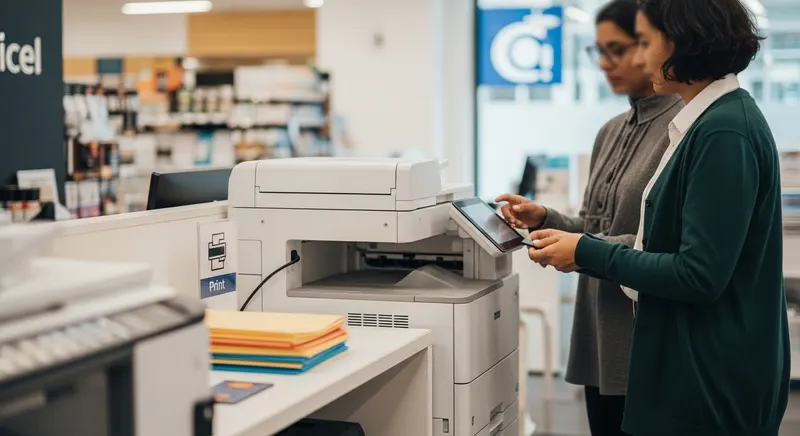
Searching for somewhere to print a document at the last minute is one of those frustratingly common situations that most Australian professionals have found themselves in. Maybe your office printer has given up the ghost the morning of a big presentation, or you’re coordinating a community sports event and need printed schedules, registration forms, or signage printed fast. Whatever the reason, knowing where to turn — and what questions to ask — can save you time, money, and a whole lot of stress. But here’s where things get interesting: for businesses, marketing teams, and sports clubs, the question of “where can I print a document near me” is rarely just about a single page. More often, it opens the door to a broader conversation about professional printing, branded materials, and how smart organisations use print as part of their overall marketing and communications strategy.
Understanding What You Actually Need Before You Print
Before you race to the nearest print shop, it pays to take a moment and assess what you’re actually trying to achieve. Are you printing a one-off internal memo, or are you producing materials for a public-facing event? Is this a short-run urgent job, or something you’ll need in volume over the coming weeks?
These questions matter because the answers will dramatically change where you should go and what you should expect to pay.
One-Off Document Printing vs. Bulk or Branded Printing
For a single document — say, a contract you need to sign or a report to bring into a meeting — your options are genuinely wide. Libraries across Australia (in cities like Sydney, Melbourne, Brisbane, and Perth) typically offer self-serve document printing services for a small per-page fee. Many Australia Post locations offer print services, as do office supply stores and local print shops in most suburban shopping precincts.
However, if you’re a marketing team preparing collateral for a trade expo in Adelaide, or a Melbourne football club printing fixture cards, team rosters, or sponsor acknowledgement sheets for 300 members, a different approach is needed entirely. Bulk and branded printing requires professional print providers who can handle volume, match brand colours accurately, and deliver on tight timelines.
Where Can I Print a Document Near Me? The Main Options Explained
Let’s break down the most common places to print documents in Australia, and what each one is best suited for.
Public Libraries and Community Centres
Most public libraries in Australia — from Darwin’s Northern Territory Library to Hobart’s state-run facilities — offer basic document printing to the public. These are great for personal, low-volume needs. Expect monochrome and colour printing at per-page rates, usually with self-serve terminals. They’re not suitable for large quantities, professional-quality branded documents, or anything requiring special paper stock.
Local Print Shops and Copy Centres
Independent print shops, found in most suburban and CBD areas across Australian states, are a step up. They can handle higher volumes, offer a variety of paper weights and finishes, and often provide same-day or next-day turnaround for standard jobs. If you’re in Brisbane needing 50 copies of a proposal, or in Perth wanting a few laminated reference cards for your team, a local copy centre is a practical option.
Many also offer design assistance for simple layouts, which can be helpful if you don’t have in-house creative resources.
Online Print Providers with Local Delivery
For marketing teams and sports clubs with a bit of lead time, online print providers are often the smartest choice. You upload your files, select your specifications, and have the finished product delivered directly to your door — whether you’re in inner-city Sydney or regional Queensland. The trade-off is turnaround time: standard jobs typically take 3–7 business days, though express options are usually available.
When ordering online, understanding your artwork requirements is critical. Most professional printers expect print-ready files in PDF, EPS, or AI format. If you’re working with logos and brand assets, knowing what a vector art file is and why it matters will help you avoid costly delays and print quality issues.
In-House Printing for Everyday Needs
Larger organisations often invest in office-grade multifunction printers for everyday document printing. This works well for internal communications, but falls short for anything customer-facing or event-ready. The quality, paper options, and finishing capabilities of a desktop office printer simply can’t match a commercial print run — particularly for materials where brand presentation matters.
When Document Printing Connects to Branded Merchandise
Here’s where it gets particularly relevant for Australian businesses, marketing teams, and sports clubs: printing documents is often just one component of a broader branded materials project. And once you’re coordinating a print job, it’s worth thinking holistically about what other printed or branded items you might need at the same time.
For example, a Gold Coast real estate agency preparing for an open day might need printed brochures, but also branded merchandise for attendees — think custom tote bags with the agency’s logo, or branded umbrellas from a wholesale supplier if the weather’s uncertain. Ordering these together can streamline your budget and ensure visual consistency across all materials.
Similarly, a Canberra government department running a community information day might need printed fact sheets but also event signage. A well-designed teardrop banner or pull-up display can make a temporary setup look polished and professional, reinforcing trust in the organisation.
Sports clubs have particularly varied needs. A Brisbane rugby league club preparing for its season launch might print registration forms, game-day programs, and draw schedules — but also need wristbands for event access, event wristbands for volunteers, or branded apparel for their committee members. Aligning printed documents with broader merchandise orders is not only efficient but ensures your brand looks cohesive from every angle.
Practical Tips for Getting Your Printing Right the First Time
Whether you’re printing a single document or coordinating a large-scale print and merchandise project, a few key practices will save you considerable headache.
Always Request a Proof Before You Commit
For anything printed in volume, always ask for a proof before the full run is produced. This is as true for printed documents as it is for custom merchandise. Understanding the difference between virtual proofs and physical samples helps you decide which level of pre-production confirmation is appropriate for your project. For high-stakes materials — a major event program, for instance — a physical sample is always worth the extra time.
Know Your File Formats and Colour Requirements
Sending the wrong file type is one of the most common causes of print delays. Most professional printers require vector-based artwork for logos and graphics. Raster images (JPGs, PNGs) may be acceptable for photographic content, but logos and text must be in vector format to avoid pixelation at scale. Similarly, if your brand has specific colour requirements, ensure your files use the correct PMS (Pantone) colour codes rather than relying on screen-based RGB values.
Plan for Lead Times
Urgency costs money in the print industry. Standard turnaround for professional print jobs typically ranges from 3–7 business days. Express or same-day services are available from many local print shops but come at a premium. For sports clubs and marketing teams with known event calendars, planning print jobs 2–3 weeks in advance gives you time for proofing, corrections, and delivery without the stress.
Consider MOQs for Branded Items
Many promotional print products — such as custom apparel, branded bags, or merchandise — have minimum order quantities (MOQs). If you’re coordinating a print run alongside branded merchandise, it’s worth understanding these thresholds. For example, branded polo shirts for your work team or graphic tees for club members often have MOQs starting at 12–25 units depending on the decoration method.
Thinking Beyond Documents: Rounding Out Your Printed Brand
Once you’ve solved the immediate question of where to print a document near you, it’s worth considering what other print and merchandise touchpoints represent your brand in the world.
For corporate teams, this might mean investing in professional stationery sets, branded notebooks, or quality apparel that staff wear with pride. Seasonal planning is equally important — knowing what winter promotional products work best in Sydney or what makes a great Christmas gift for employees helps you build a full-year merchandise calendar rather than scrambling last minute.
Sports clubs might explore custom gym towels for their fitness members, novelty USB drives loaded with training plans for athletes, or promotional USB drives for sponsors and administrators. Even functional items like branded totes and backpacks for training gear carry your club’s identity wherever they go.
And if sustainability is a priority for your organisation — as it increasingly is for Australian councils, universities, and NFPs — consider whether any of your printed or branded materials can incorporate eco-friendly alternatives. From recycled paper stock to bamboo merchandise, your print decisions are a reflection of your values as well as your brand.
Conclusion: Key Takeaways for Smarter Printing in Australia
The next time you find yourself asking “where can I print a document near me,” remember that the answer depends entirely on what you’re printing, how much you need, and what impression you want to make. Here are the most important things to keep in mind:
- Match the solution to the need: Libraries and copy centres suit urgent, low-volume personal printing; online and commercial printers are better for branded, high-volume, or professional-grade work.
- Prepare your artwork correctly: Use vector files for logos, specify PMS colours for brand accuracy, and always request a proof before committing to a full print run.
- Plan ahead: Build in 2–3 weeks for print and merchandise projects where possible — rushing adds cost and increases the risk of errors.
- Think holistically: Document printing often sits within a broader branded materials project; coordinate your print and merchandise orders together for better consistency and value.
- Use print to reinforce your brand: From signage and stationery to custom apparel and eco-friendly merchandise, every printed item is a brand touchpoint — make it count.