
How to Customise a Photo Frame for Memorable Branded Merchandise and Gifts
Discover how to customise photo frames for corporate gifts, sports clubs, and events. Tips on decoration, MOQs, and making merch that lasts.

Written by
River Chen
Awards & Recognition
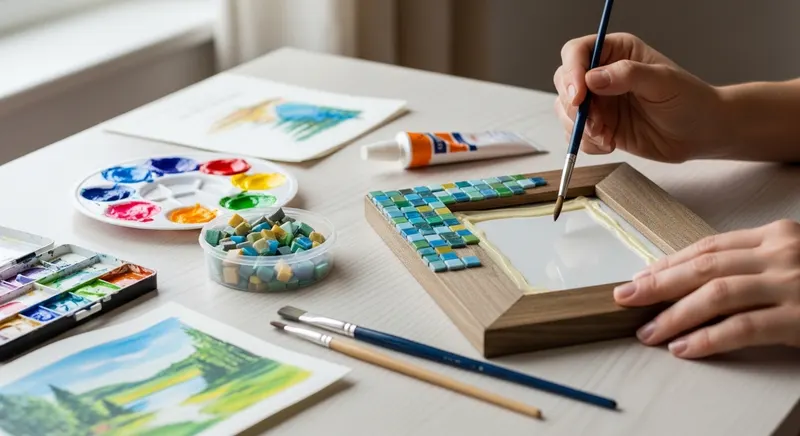
When it comes to branded merchandise that people actually keep, few products punch above their weight quite like a custom photo frame. Unlike a branded pen that runs dry or a tote bag shoved under the bed, a personalised photo frame earns a permanent spot on someone’s desk or wall — taking your logo along for the ride. Whether you’re a marketing team looking for a standout corporate gift, a business rewarding loyal clients, or a sports club celebrating a premiership season, knowing how to properly customise a photo frame can make the difference between a forgettable freebie and a genuinely cherished keepsake.
Why Custom Photo Frames Work So Well as Branded Merchandise
Let’s be honest — not all promotional products are created equal. Some get binned within a week, and some gather dust in a drawer. A thoughtfully customised photo frame, however, occupies prime real estate in a home or office. It holds something personal. It’s functional, decorative, and emotionally resonant. That combination is genuinely rare in the promotional products world.
For Australian businesses, this matters enormously. Marketing teams in Sydney and Melbourne know that brand recall hinges on visibility — and a framed photo on someone’s desk delivers that visibility day after day, year after year. A real estate agency in Brisbane might present new homeowners with a custom branded frame. A Perth gym might give members a framed photo of their personal best moment. A Canberra government department might recognise a retiring team member with an engraved frame and a commemorative photo. The applications are almost limitless.
The Emotional Resonance Factor
Unlike most merchandise, photo frames capture memories. When your brand is associated with someone’s favourite moment — a sporting win, a team celebration, a graduation — that positive emotional connection transfers directly to your organisation. This is particularly powerful for sports clubs, where community pride and shared milestones are central to the culture.
Understanding Your Options: Types of Photo Frames to Customise
Before you dive into the ordering process, it’s worth understanding what types of photo frames are actually available for customisation in the Australian market.
Material Options
Timber frames are a perennial favourite. Natural timber lends an upscale, premium feel and works beautifully with laser engraving — ideal for corporate gifts, awards, and recognition pieces. A Melbourne law firm presenting a departing partner with a laser-engraved timber frame and a team photo is a classic example of this approach done well.
Acrylic and glass frames offer a sleek, modern aesthetic. These tend to suit tech companies, design studios, and contemporary brands. Digital UV printing on acrylic can produce vivid, full-colour branding with impressive definition.
Metal frames — typically aluminium or stainless steel — are durable and sophisticated. They’re a strong choice for engineering firms, government departments, and organisations in industrial sectors. Similar to how a stainless steel drink bottle conveys durability and quality, a metal photo frame communicates longevity and professionalism.
Composite and resin frames tend to be the most budget-friendly. They work well for high-volume orders where cost per unit is a priority — think large-scale community events, school fundraisers, or conference giveaways.
Size and Format Considerations
Standard photo sizes in Australia — 4x6 inch, 5x7 inch, and 8x10 inch — are the most commonly available for bulk customisation. Larger formats are possible but come with longer lead times and higher costs. Consider what photo size suits your use case. A sports club handing out frames to players at the end of season presentation night might choose a standard 4x6 inch (perfect for a portrait photo taken by a club photographer), while a corporate client gift might warrant a larger 8x10 for a premium feel.
Decoration Methods: How to Customise a Photo Frame
This is where the real decision-making happens. Different decoration methods produce very different results, and choosing the right one depends on your frame material, artwork style, budget, and quantities.
Laser Engraving
Laser engraving is arguably the most popular decoration method for timber and metal photo frames. It produces a permanent, precise etched effect — no ink to fade, no print to peel. For logos that are clean and relatively simple, laser engraving delivers an exceptionally professional result. It’s particularly suited to awards and recognition gifts.
A typical corporate gift scenario: an Adelaide financial services firm orders 50 timber photo frames for their top-performing clients, each laser engraved with the client’s name, the company logo, and a short message. This is exactly the kind of premium, personalised touch that strengthens long-term business relationships.
Pad Printing
Pad printing transfers ink from an etched plate onto curved or irregular surfaces — making it a practical choice for resin and composite frames with textured borders. It’s cost-effective for larger runs and suits two-to-four colour logos well. However, it’s not ideal for highly detailed, photographic-quality artwork.
UV Digital Printing
For full-colour branding with maximum visual impact, UV digital printing directly onto the frame surface is hard to beat. This method is especially suited to acrylic and glass frames and works well when your branding includes gradients, photography, or multi-colour design elements. If you’re creating a batch of frames for a Gold Coast event or a vibrant sporting club rebrand, UV printing gives you the colour fidelity to do your artwork justice.
Sublimation Printing
Sublimation infuses dye directly into the surface of certain materials (typically polymer-coated substrates), producing vivid, durable, photographic-quality results. If you’re already familiar with sublimation from products like a sublimated polo shirt, you’ll appreciate how vibrant the results can be. Sublimation on photo frames is best suited to frames with a white or light-coloured polymer surface.
Before committing to any decoration method, it’s worth reviewing the pros and cons of virtual proofs versus physical samples — our guide on virtual proofs vs physical samples for promotional products covers this topic in detail and can save you costly surprises.
Ordering Custom Photo Frames: What You Need to Know
Getting a smooth, on-time delivery of your custom frames requires some upfront planning. Here are the key practical considerations.
Minimum Order Quantities
MOQs for custom photo frames typically start at around 25–50 units, though this varies by supplier and decoration method. Laser engraving often has a lower MOQ than pad printing due to setup differences. UV digital printing may have a slightly higher MOQ but delivers the broadest colour range. If you’re a small sports club ordering for a squad of 20, look for suppliers who can accommodate low minimum runs or offer a price break at 25 units.
Artwork Requirements
For laser engraving, you’ll need vector artwork (AI or EPS files preferred) with clean, high-contrast elements. For UV printing or sublimation, high-resolution files (300 dpi minimum at print size) are essential. Most reputable Australian suppliers will review your artwork before production begins — take advantage of this, especially if you’re also customising other items for the same event, like wristbands or tee shirt graphics.
Turnaround Times
Standard production on custom photo frames typically runs 10–15 business days once artwork is approved, with express options available for an additional cost. If you’re planning frames for a Christmas function or end-of-year event, it’s worth ordering well ahead — our guide to Christmas gifts for employees explains why lead time is so critical for seasonal gifting campaigns.
Budgeting
Pricing varies considerably based on material, frame size, decoration method, and quantity. As a general guide:
- Entry-level resin frames with pad printing: $8–$15 per unit at 50 pieces
- Timber frames with laser engraving: $18–$35 per unit at 25–50 pieces
- Acrylic frames with UV printing: $20–$40 per unit depending on size and complexity
Remember to factor in setup fees, freight (especially if you’re in Darwin or Hobart where freight costs can be higher), and any rush charges if your timeline is tight.
Pairing Custom Photo Frames with Other Branded Products
Custom photo frames rarely need to go it alone. Pairing them with complementary branded merchandise creates a cohesive gift pack that elevates the overall impression.
For a corporate client gift pack, you might pair a laser-engraved timber frame with a stainless steel drink bottle or a quality notebook. For a sports club end-of-season presentation, frames pair brilliantly with custom sports apparel or club-branded totes and backpacks. For a community event or outdoor activation, consider bundling frames with practical items like sunscreen with SPF50 or a branded umbrella.
The key is making sure the overall package tells a consistent brand story. When every item in a gift pack looks like it belongs together — same colour palette, same finish, same attention to detail — the cumulative impact is significantly stronger.
Avoiding Common Mistakes When You Customise a Photo Frame
A few pitfalls are worth flagging before you place your order.
Don’t go too logo-heavy. A tasteful logo placement (typically on the frame border, stand, or a small engraved plate) is far more sophisticated than plastering your branding across the entire frame. Think of it the way you’d approach a work polo shirt — the logo should enhance the product, not overwhelm it.
Avoid low-resolution artwork. This is the most common issue and the most avoidable. Fuzzy logos on printed frames look unprofessional and can’t be fixed after production. Sort your artwork files before you brief your supplier.
Check BPA safety if frames include any plastic components. If you’re ordering composite or resin frames with removable components, it’s worth understanding material safety. Our guide on what BPA is is a useful primer if you’re unfamiliar with material standards.
Order a sample or check a virtual proof. Never go straight to a full production run without seeing how your artwork will look on the actual product. This step alone can save you from expensive reprints.
Conclusion: Key Takeaways for Customising Photo Frames
Whether you’re a marketing team in Sydney planning a client appreciation campaign, a business in Melbourne sourcing premium end-of-year gifts, or a sports club in Brisbane celebrating a championship season, the decision to customise a photo frame is one that consistently delivers strong returns on investment. Frames are kept, displayed, and noticed — and your brand goes along for the journey.
Here are the key takeaways to guide your project:
- Choose your material strategically — timber and metal for premium, upscale gifts; resin and composite for high-volume, budget-conscious orders
- Match your decoration method to your material and artwork — laser engraving for simplicity and longevity; UV printing for full-colour impact; sublimation for vibrant, photographic quality
- Plan your timeline — allow at least 15 business days from artwork approval to delivery, and more for peak periods like Christmas
- Get your artwork right first — vector files for engraving, high-resolution for printing, and always review a proof before approving production
- Pair frames with complementary products for a cohesive, memorable gift pack that amplifies your brand impression across multiple touchpoints