
Custom Hard Hats for Warehouse and Logistics Teams Across Australia
Discover how to order custom hard hats for warehouse and logistics in Australia — branding tips, decoration methods, MOQs, and buying advice.

Written by
Rory Singh
Safety & Workwear
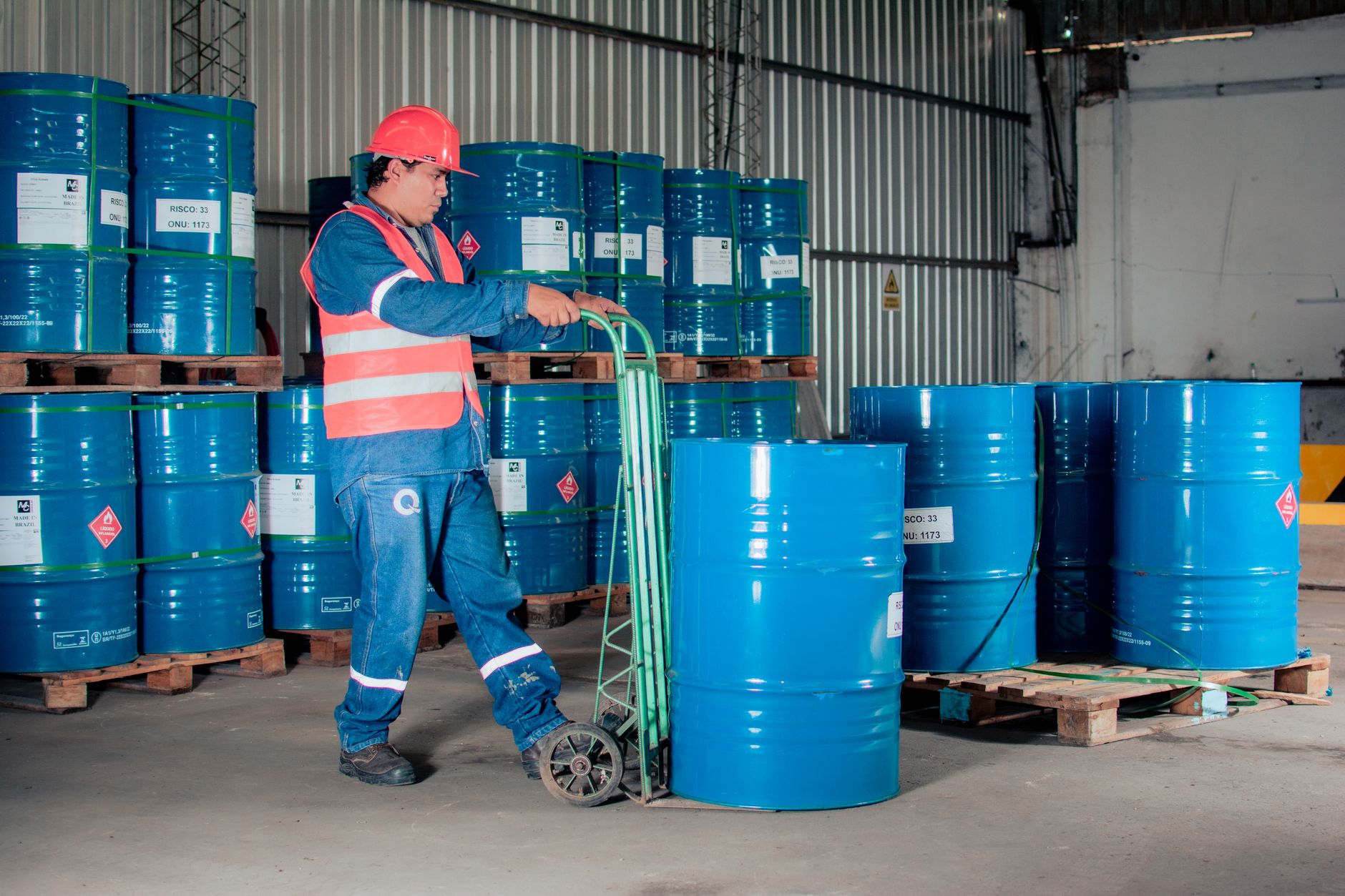
Stepping onto a busy warehouse floor or a logistics hub in full swing is a sensory experience — forklifts humming, pallets stacking, team members moving with purpose. In these high-activity environments, safety isn’t optional, and neither is clear visual identification. Custom hard hats for warehouse and logistics operations across Australia have become one of the smartest investments a business can make, serving double duty as critical PPE and a powerful branding tool. Whether you’re managing a distribution centre in Western Sydney, a cold-chain facility in Melbourne’s outer suburbs, or a freight terminal near Brisbane Airport, branded hard hats give your team a professional, cohesive look while keeping compliance front and centre.
This guide walks you through everything you need to know — from choosing the right hard hat style, to selecting a decoration method, to managing your order like a seasoned procurement pro.
Why Custom Hard Hats Matter in Warehouse and Logistics Settings
Hard hats aren’t just about ticking a compliance box. In Australia, head protection is mandated under Work Health and Safety (WHS) regulations in any environment where there’s a risk of falling objects, head collisions with fixed structures, or electrical hazards. Warehousing and logistics operations check all those boxes.
But custom hard hats go well beyond basic compliance. Here’s why forward-thinking operations managers and marketing teams are increasingly investing in branded head protection:
Visual Role Identification
In a large distribution centre with hundreds of workers, instantly identifying team roles by hard hat colour or logo is invaluable. Supervisors in white, general workers in yellow, contractors in orange — these conventions are already common, but adding your company logo to each colour makes the system even more effective. Visiting clients, auditors, or new team members can orient themselves quickly when colour and branding work together.
Brand Presence and Professionalism
When a client visits your facility in Adelaide or Perth, a uniformed team wearing cohesive branded workwear — including custom hard hats — sends a clear message about your operational standards. It’s the same principle that drives investment in branded stationery for professional settings or affordable promotional products for workplace visibility. Every branded touchpoint reinforces credibility.
Workplace Safety Culture
Custom hard hats can also reinforce internal safety messaging. Some organisations print safety slogans, emergency contact numbers, or site-specific hazard reminders directly onto the shell — turning every hat into a walking reminder of your safety-first culture.
Understanding Australian Standards for Hard Hats
Before diving into decoration and design, it’s essential to confirm that any hard hat you order meets Australian and New Zealand Standard AS/NZS 1801:1997 (industrial safety helmets). This is the benchmark for workwear head protection used across construction, logistics, mining, and warehousing in all states and territories.
When sourcing custom hard hats, always ask your supplier to confirm the AS/NZS compliance certification for the specific model you’re ordering. A visually impressive hard hat that doesn’t meet Australian standards isn’t worth the risk — legally or ethically.
Key features to check:
- Class: General industrial (Type 1) vs electrical hazard-rated variants
- Brim style: Full brim (better sun protection for outdoor work) vs cap style (preferred in tight indoor spaces)
- Adjustment system: Ratchet systems are faster to adjust than pin-lock for high-turnover teams
- Ventilation: Vented models suit warm climates like Darwin and Queensland; non-vented required for electrical hazard environments
Decoration Methods for Custom Hard Hats
Once you’ve confirmed the right hard hat for your operational environment, it’s time to think about customisation. The curved, hard-shell surface of a hard hat presents specific decoration challenges — not every method is suitable.
Pad Printing
Pad printing is one of the most common and cost-effective methods for hard hat branding in Australia. It works by transferring ink from an etched plate to the helmet surface via a silicone pad, allowing it to conform to curved surfaces. Pad printing is ideal for single or two-colour logos with sharp, clean lines. It’s a reliable choice for bulk orders with consistent results.
Screen Printing
For larger branding areas and slightly more complex designs, screen printing can be used on the flat panels of certain hard hat styles. It’s well-suited to high-volume orders and delivers vibrant, durable colour.
Sticker and Label Application
Pre-printed vinyl decals or reflective stickers are commonly used in logistics environments — particularly when hats need to be updated regularly (new site names, updated branding). Reflective options also improve low-light visibility in night-shift environments. While not as permanent as direct printing, quality vinyl labels are surprisingly durable and can be a practical solution for businesses that rebrand or run multiple site-specific operations.
Digital UV Printing
Increasingly available through specialist suppliers, UV digital printing allows full-colour, photographic-quality artwork directly onto the helmet surface. It’s a premium option — great for client-facing roles or safety leadership teams where brand impact matters most.
Minimum Order Quantities, Turnaround Times, and Budgeting
Planning a hard hat order for your warehouse or logistics operation requires understanding a few key procurement realities.
Minimum Order Quantities (MOQs)
For pad printing on hard hats, typical MOQs in Australia sit around 25 to 50 units. Some suppliers offer lower MOQs for simpler vinyl label applications. If you’re running a smaller operation — say, a regional logistics firm in Hobart or Darwin — it’s worth asking about lower-run options or whether standard stock colours can be combined to meet the minimum.
For large national operations across multiple states, bulk orders of 200 units or more often unlock significant per-unit savings, so it pays to plan your ordering cycle carefully.
Turnaround Times
Standard production turnaround for custom hard hats in Australia is typically 10 to 15 business days from artwork approval. If you’re onboarding a large workforce quickly — common in peak freight seasons — build extra lead time into your planning. Rush orders may be available for an additional fee, though availability varies.
Budget Considerations
Custom hard hats are a mid-range investment in your workwear budget. Expect to pay more per unit than you would for, say, USB promotional drives for a conference giveaway — but far less than bespoke safety systems. When you factor in the dual value of compliance and branding, the cost-per-impression is genuinely competitive.
Budget-conscious buyers should weigh:
- One-time setup fees (artwork and plate creation for pad printing)
- Volume discounts across tiered pricing
- Whether you need new lanyards, chin straps, or accessories to accompany the order
Artwork and Branding Tips for Hard Hat Orders
Getting your artwork right before production begins is one of the most important steps in any custom merchandise order — and hard hats are no exception.
Vector Files Are Non-Negotiable
For pad printing and screen printing, you’ll need your logo in a vector format (AI, EPS, or SVG). Raster files like JPGs or PNGs lose resolution when scaled. If your marketing team only has digital files, your supplier may offer artwork redraws for a fee.
Limit Colour Complexity
Most hard hat decoration methods work best with one to three colours. Complex gradients or photographic imagery don’t translate well to pad printing — save those treatments for UV digital printing if your budget allows. PMS (Pantone Matching System) colour codes should be supplied wherever brand colour accuracy is important.
Placement Matters
The most common placement is the front panel of the hard hat, centred above the brim. Side panels are sometimes used for additional branding — useful if you want to display both a company logo and a site or division identifier. Avoid placement near ventilation ports or adjustment mechanisms.
Managing a Multi-Site or High-Volume Order
For logistics businesses operating across multiple states — think freight companies with hubs in Sydney, Melbourne, Brisbane, and Perth — managing a branded hard hat order at scale requires solid coordination.
Consider appointing a single internal contact to manage artwork approvals and proof sign-off. Centralising this avoids conflicting design feedback and delays. If each site has slightly different branding requirements (different logos for different business divisions, for example), brief your supplier upfront and request separate proofs for each variation.
For teams that also manage broader workwear procurement, it’s worth exploring how your hard hat order fits within a wider uniform or PPE programme. Custom hard hats pair naturally with hi-vis vests, branded safety glasses lanyards, and embroidered polo shirts — building a complete, professional site uniform.
The same organised approach applies when running any branded merchandise project, whether that’s sourcing branded hand sanitiser for a Brisbane workplace or pulling together delegate packs for a corporate conference.
Common Mistakes to Avoid When Ordering Custom Hard Hats
Even experienced procurement teams can stumble. Here are the pitfalls worth knowing before you place your order:
- Skipping compliance checks: Never assume a hard hat meets AS/NZS standards without written confirmation from the supplier.
- Ordering without a physical sample: For large orders, always request a pre-production sample to check colour accuracy, print quality, and fit before committing to full production.
- Underestimating quantities: Order slightly more than your current headcount to account for replacements, new starters, and the inevitable lost hat.
- Ignoring hat shell colour in branding: Dark-coloured hard hats (navy, black) limit certain decoration methods. Discuss your preferred shell colour with your supplier before locking in a decoration method.
- Leaving artwork too late: Production can’t begin until artwork is approved. Delays here cascade into delivery delays — particularly frustrating if you’re onboarding staff to a new site.
Conclusion: Key Takeaways for Ordering Custom Hard Hats for Warehouse and Logistics in Australia
Custom hard hats for warehouse and logistics operations are a smart, practical investment that combine WHS compliance with professional brand presentation. Whether you’re outfitting a small regional team or managing a national rollout across multiple distribution centres, the decisions you make around product selection, decoration method, and artwork preparation will determine the outcome of your order.
Here are the key points to take with you:
- Always verify AS/NZS 1801:1997 compliance before ordering — this is non-negotiable for any workplace operating under Australian WHS regulations.
- Choose your decoration method based on design complexity — pad printing suits most standard logo applications, while UV digital printing is better for detailed or full-colour artwork.
- Plan your timeline carefully — allow at least 15 business days from artwork approval, especially ahead of peak seasons or major site openings.
- Use vector artwork and PMS colour codes to ensure accurate, production-ready branding from the start.
- Think beyond the hard hat — a well-branded PPE programme pairs head protection with hi-vis, embroidered workwear, and site signage to create a cohesive, professional environment that impresses clients and motivates teams alike.
A well-executed custom hard hat order does more than protect your team — it tells everyone who walks onto your site exactly who you are and how seriously you take your work.