
Business Card Printing in Australia: Everything You Need to Know Before You Order
From paper stock to finish options, here's your complete guide to business card printing for Australian businesses and marketing teams.

Written by
Lydia Park
Stationery & Office
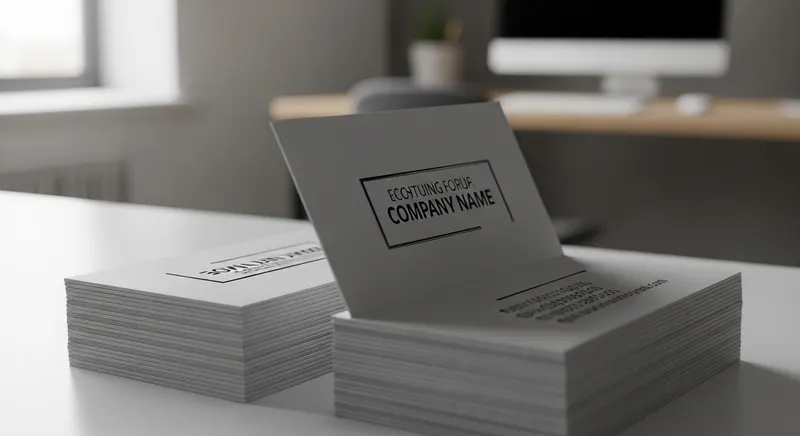
First impressions matter. In an age where digital connections dominate, a well-designed, professionally printed business card still carries surprising weight. Hand someone a crisp, quality card at a Sydney networking event or a Melbourne trade expo, and it signals something that a LinkedIn connection simply can’t — that you’ve invested in your brand, your professionalism, and the relationship. But navigating the world of business card print can be surprisingly complex. From choosing the right paper stock and finish to understanding decoration methods, print quantities, and turnaround times, there’s a lot to consider before placing an order. This guide walks you through everything Australian businesses and marketing teams need to know to get it right.
Why Business Card Printing Still Matters in 2026
It’s tempting to write off the printed business card as old-fashioned. But the data tells a different story. Studies consistently show that physical cards have higher recall rates than digital contact exchanges. When you hand someone a tangible, well-produced card, they’re more likely to follow up — and more likely to remember you.
For Australian businesses, sports clubs, and marketing teams, business cards serve a practical function beyond just sharing contact details. They reinforce brand identity, communicate professionalism, and act as a small but powerful piece of branded collateral. A Brisbane-based real estate agency handing out heavy matte cards with a spot UV logo will land very differently than a flimsy, low-budget card printed on thin stock.
The point isn’t to spend a fortune. It’s to be intentional — and to understand what your choices communicate to the person on the receiving end.
Understanding Business Card Print Specifications
Before you jump into design, it’s important to understand the core specifications that will affect both the look and feel of your finished cards.
Standard Sizes and Orientations
The standard Australian business card size is 90mm × 55mm — the same as a credit card footprint. This is by far the most common format and fits neatly into wallets and cardholders. Landscape orientation is the most traditional choice, but portrait cards have grown in popularity, particularly for creative industries and boutique businesses.
Non-standard sizes — such as square cards, slim cards, or folded business cards — are available and can make a strong impression. However, they typically come at a higher cost per unit and may require longer lead times.
Paper Stock Options
Paper stock is where most of the tactile impact comes from. The key specifications to understand are:
- Weight (gsm): Standard office paper sits around 80gsm. Business cards typically start at 300gsm and can go up to 600gsm or higher for premium options. The heavier the stock, the more substantial the card feels in hand.
- Coated vs uncoated: Coated stocks have a smooth surface that reproduces colour vibrantly and resists fingerprints. Uncoated stocks have a more natural, tactile feel and are popular for premium or eco-conscious brands.
- Specialty stocks: Options like recycled paper, kraft board, linen finish, or even synthetic materials (plastic-like PVC cards) are available for businesses wanting something distinctive.
Finish Options for Business Card Print
The finish applied to your card dramatically affects how it looks and feels. Common options include:
- Gloss laminate: Shiny and vibrant, great for photo-heavy designs
- Matte laminate: Sophisticated and tactile, minimises glare
- Soft-touch (velvet) laminate: An ultra-premium feel that’s become increasingly popular with law firms, financial advisers, and professional services businesses in cities like Sydney and Melbourne
- Spot UV: A glossy coating applied to specific areas (often a logo or pattern), creating an eye-catching contrast on matte cards
- Foil stamping: Metallic gold, silver, or coloured foil applied to select design elements — impactful but adds to the cost
- Debossing or embossing: Pressing design elements into or out of the card surface for a tactile, high-end finish
Understanding these options is essential when briefing a print supplier, as each affects price, lead time, and the overall brand impression you’re creating. If you’re already thinking about how decoration methods apply across your broader branded merchandise suite, our guide on virtual proofs vs physical samples for promotional products is worth reading before you place any order.
Print Methods Used in Business Card Production
Different print methods suit different budgets, quantities, and design requirements. The two most common for business cards are digital printing and offset printing.
Digital Printing
Digital printing is ideal for smaller runs — typically under 500 cards — and offers fast turnaround times, sometimes as quick as 24–48 hours from approved artwork. It’s cost-effective for short runs and allows variable data printing (useful when each card in a batch needs slightly different information, such as individual staff names or contact numbers).
Most standard business card orders placed by small businesses, sports clubs, and marketing teams will fall into this category.
Offset (Lithographic) Printing
Offset printing produces exceptional colour accuracy and consistency, making it the preferred method for larger runs (usually 500+ cards) or when PMS (Pantone Matching System) colour accuracy is non-negotiable. If your brand guidelines specify exact Pantone colours — common for larger corporate businesses and franchise networks — offset printing ensures those colours reproduce faithfully every time.
The trade-off is setup cost and lead time. Offset printing involves creating physical plates, which adds to the upfront expense. For small quantities, it rarely makes financial sense. But for a Gold Coast business ordering 2,000+ cards across a large team, the per-unit cost becomes very competitive.
Minimum Order Quantities, Pricing, and Turnaround
MOQs for Business Card Printing
Most business card print suppliers in Australia work with MOQs starting at 50 to 100 cards for standard digital prints. Some offer single-card proofing for approval purposes. Specialty finishes like foil, soft-touch laminate, or letterpress often require higher MOQs — typically 250 to 500 minimum — due to setup costs involved.
Budget Considerations
Pricing varies considerably based on stock, quantity, and finish. As a general guide for Australian buyers in 2026:
- Standard digital business cards (250–500 units, 350gsm, gloss or matte laminate): Roughly $40–$120 depending on supplier and turnaround
- Premium finish cards (soft-touch, spot UV, or foil, 500 units): Typically $150–$400+
- Specialty stocks or non-standard sizes: Budget 20–50% more than standard equivalents
Always factor in GST, and be aware that express or same-day turnaround services typically attract a surcharge.
Turnaround Times
Standard turnaround for digital business card printing in Australia is 3–5 business days from artwork approval. Express options are available through many suppliers for 24–48 hour production. Offshore printing (popular for bulk orders) may offer significant cost savings but requires 2–4 weeks lead time, including shipping.
If your business cards are part of a broader merchandise order — say, a Perth event manager coordinating branded bags, lanyards, and signage — aligning all your turnaround timelines is critical. It’s the same discipline needed when managing any multi-product branded campaign.
Artwork and File Requirements
Getting your artwork right before submission saves time, money, and frustration. Here’s what most suppliers require:
- File format: PDF (press-ready), AI, or EPS are standard. High-resolution JPEGs or PNGs (300dpi minimum) are often accepted for digital print
- Bleed and safe zone: Most suppliers request a 3mm bleed around all edges, with important elements kept 3–5mm inside the trim line to avoid being cut off
- Colour mode: CMYK for digital and offset printing. RGB files will be converted and may produce unexpected colour shifts
- Fonts: Embed or outline all fonts to prevent substitution
- Resolution: All images and logos must be at least 300dpi at print size
If your logo was designed for screen use only (72dpi), you’ll need a vector or high-resolution version before going to print. This is one of the most common issues that delays orders — particularly for sports clubs and smaller businesses that may not have professional brand assets on hand.
Integrating Business Cards into a Broader Brand Strategy
Business cards rarely exist in isolation. For marketing teams and businesses running events, trade shows, or brand activations, they’re one piece of a much larger puzzle.
Think about how your business cards complement other branded materials your team might be using. A Canberra government department attending a national conference might pair their business cards with branded totes and backpacks for delegates, promotional USB drives loaded with digital resources, and tear-drop banners for their exhibition space.
A Melbourne sporting club might combine member business cards with custom sports apparel and wristbands for event days. Maintaining visual consistency across all touchpoints — the same colours, fonts, and logo treatment — is what transforms individual products into a cohesive brand experience.
For broader gifting and brand-building campaigns beyond print, it’s also worth exploring options like branded stainless steel drink bottles, work polo shirts, or even novelty USB drives as part of a coordinated welcome pack or client gifting strategy. And if your team is thinking about seasonal campaigns, our guide to winter promotional products in Sydney or Christmas gifts for employees might spark some useful ideas.
Aligning your business card print strategy with your broader promotional merchandise calendar means you’re never caught scrambling for materials at the last minute.
Tips for Ordering Business Cards Like a Pro
A few practical pointers before you hit submit on your next order:
- Order more than you think you need. The cost difference between 250 and 500 cards is often minimal, and running out at a critical moment is frustrating and costly to fix in a hurry.
- Always request a digital proof before approving. Check every detail: spelling, phone numbers, email addresses, website URLs, and social handles.
- Test before committing to large quantities. If you’re ordering a new design or trying a new supplier, ordering a short-run test batch first can save you from a costly mistake on a 2,000-card run.
- Brief your designer with print specs upfront. Designing for screen and designing for print are different disciplines. Make sure your designer knows the exact size, bleed requirements, and colour mode from the start.
- Store cards correctly. Keep printed cards away from heat, moisture, and direct sunlight. Laminated cards are more durable but can still warp if stored incorrectly.
Key Takeaways
Making the most of your business card print investment comes down to planning, specification awareness, and brand consistency. Here’s a quick summary of what to keep in mind:
- Paper stock and finish drive perceived quality — invest in at least 350gsm stock with a matte or soft-touch laminate for a professional result
- Match your print method to your quantity — digital printing for smaller runs, offset for large volumes requiring precise PMS colour matching
- Artwork preparation is critical — always supply CMYK, print-ready files at 300dpi with correct bleed
- MOQs typically start at 50–100 for standard cards, but specialty finishes require higher minimums; plan your quantities accordingly
- Integrate business cards into your broader brand strategy — consistent visuals across all branded materials, from print to merchandise, create a far stronger brand impression than any single product alone
Business cards are a small investment with a disproportionate impact on how your brand is perceived. Get the fundamentals right, and they’ll do meaningful work for you long after the handshake is over.