
Bronze Medals for Sports Clubs and Events: A Complete Ordering Guide
Everything Australian sports clubs and event organisers need to know about ordering bronze medals — styles, customisation, MOQs and budgets.

Written by
River Chen
Awards & Recognition
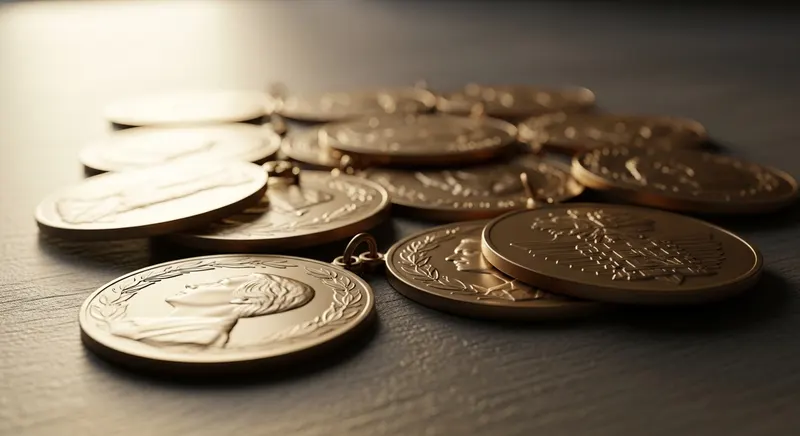
Ordering medals for your next event might seem straightforward, but anyone who’s been through the process knows it can quickly become complicated. Choosing the right bronze medals involves far more than picking a design from a catalogue — you need to consider decoration methods, turnaround times, budget tiers, ribbon options, and whether your artwork will hold up at a small or large size. Whether you’re running a primary school athletics carnival in Adelaide, coordinating a regional swimming competition in Brisbane, or managing awards night for a corporate wellbeing challenge in Sydney, this guide covers everything you need to know to get the perfect bronze medals for your event.
Why Bronze Medals Still Matter in 2026
There’s something enduringly powerful about a physical medal. In an age of digital certificates and online leaderboards, a tangible award placed around a participant’s neck carries a weight — quite literally — that no email or social media post can replicate. Bronze medals, in particular, hold a special significance. They represent genuine achievement, the result of hard work and competition, and they’re treasured by recipients of all ages.
For sports clubs across Australia, from junior football associations in Perth to surf lifesaving clubs on the Gold Coast, medals are a cornerstone of the awards experience. They validate effort, encourage return participation, and build club culture in a way that few other promotional or recognition items can match. For businesses running internal competitions, wellness challenges, or charity fundraiser events, medals add a professional, polished touch that elevates the entire programme.
The fact that bronze medals sit in the third-place position doesn’t diminish their appeal. Many competitors prize a bronze over a certificate precisely because it’s a lasting physical memento. That emotional connection is exactly why getting your medals right matters so much.
Types of Bronze Medals: What’s Available in Australia
When you start exploring your options, you’ll quickly discover that “bronze medals” encompasses a surprisingly wide range of products. Understanding the different styles will help you narrow down what’s right for your event.
Die-Cast Zinc Alloy Medals
The most common type of custom medal in Australia, die-cast zinc alloy medals are manufactured by pouring molten metal into a precision mould. This method allows for intricate designs, fine detail, and a premium weight and feel. The zinc base is then electroplated with a bronze finish, giving it that classic warm, burnished look. These are ideal for sporting events where quality and presentation matter, and they scale well from small club runs of 50 to large state-level competitions of several thousand.
Stamped Steel Medals
A more budget-conscious option, stamped steel medals are pressed from sheet steel and then plated with a bronze finish. They’re lighter and less detailed than die-cast options but still look professional. These work well for schools, community events, and large participation-focused competitions where the sheer volume of medals needed requires a tighter per-unit cost.
Custom Shaped Medals
One of the most exciting developments in the medal space is the ability to order custom-shaped pieces. Rather than a standard circle or star shape, your medal can be cut to match your club’s logo, your event’s theme, or a symbol relevant to your sport. A cycling event in Melbourne might opt for a wheel-shaped medal; a swimming club in Darwin might choose a dolphin or wave silhouette. These require a higher setup investment but deliver a truly memorable keepsake.
3D Medals
For premium events and high-profile competitions, 3D medals feature raised relief details that go beyond flat engraving. Corporate tournaments, championship finals, and gala awards nights are natural fits for this style.
Decoration and Customisation Options
One of the key decisions when ordering custom bronze medals is how your branding and artwork will be applied. Different decoration methods suit different medal types and budget levels.
Epoxy Dome and Full-Colour Printing
A printed paper or digitally produced insert is placed under a clear epoxy resin dome. This allows for full-colour logos, photography-quality artwork, and complex colour gradients — all without the cost of a custom die. It’s a popular choice for one-off events or organisations without a large medal budget. Minimum order quantities (MOQs) are typically lower with this method, sometimes starting at just 25–50 units.
Laser Engraving
For a more traditional look, laser engraving etches your artwork directly into the medal surface. It produces crisp, permanent results and works particularly well on polished bronze finishes. It’s worth noting that laser engraving is monochromatic — if your logo relies heavily on colour, this may not be the right method. That said, for elegant corporate awards or classic sporting recognition, the effect is timeless.
Screen Printing and Pad Printing
Some medals allow for pad printing directly onto the face of the medal or the accompanying ribbon. This suits simple designs with one to two spot colours and is a cost-effective way to add a club logo or event name. Before committing to this method, it’s worth checking our guide on virtual proofs vs physical samples for promotional products to understand how to approve artwork accurately before production.
Ribbons, Lanyards, and Presentation
A medal without a ribbon is like a trophy without a base. The ribbon is an integral part of the product and deserves as much consideration as the medal itself.
Standard ribbons come in a range of widths and colours, with common options including plain single-colour ribbons, striped two-tone ribbons, and sublimated full-colour custom ribbons. If you want your event’s name, logo, or colour scheme woven or printed into the ribbon, sublimation is the way to go — the same printing technology used in our sublimated polo range produces vibrant, dye-saturated results that won’t fade or peel.
Presentation packaging is another consideration for premium events. Individual medal boxes or velvet pouches add a sense of occasion and are particularly valued at corporate events, gala presentations, or end-of-season club award nights.
Minimum Order Quantities and Turnaround Times
Understanding MOQs and lead times is crucial for planning any medal order, especially if you’re working towards a fixed event date.
Most Australian medal suppliers require a minimum of 25–50 units for stock medals with epoxy inserts, rising to 100–250 units for custom die-cast orders. Fully custom-shaped medals often have MOQs of 100 or more due to the tooling costs involved.
Turnaround times vary considerably depending on complexity:
- Stock medals with printed inserts: 5–10 business days
- Standard custom die-cast medals: 3–5 weeks
- Custom-shaped medals: 5–8 weeks, potentially longer for first-time orders requiring new tooling
If you’re ordering from overseas manufacturers — common for custom-shaped or premium 3D medals — factor in shipping and potential customs delays. For time-sensitive events, always confirm production timelines in writing and build in a buffer of at least one week.
Budget Planning for Bronze Medals
Medal costs vary widely based on size, weight, decoration complexity, and order volume. Here’s a general guide to help frame your budget planning:
- Stock medals with epoxy domes (bulk orders of 100+): $3–$8 per unit
- Custom die-cast medals (orders of 250+): $6–$15 per unit
- Premium 3D or custom-shaped medals (orders of 100+): $12–$30+ per unit
Setup fees for custom dies can range from $150 to $500+ and are usually a one-time cost — subsequent orders using the same die are significantly cheaper per unit. Always ask your supplier whether the die fee is included in the quote or additional.
When building your event budget, don’t forget to account for associated merchandise. Many successful sports events pair medal presentations with complementary branded items. Wristbands are popular for event entry management, while branded tote bags and backpacks make excellent participant packs. Outdoor events in Queensland and Western Australia might also benefit from including SPF 50+ sunscreen or branded umbrellas for sun protection.
Pairing Bronze Medals With Broader Event Merchandise
Medals rarely exist in isolation. The most impactful events create a cohesive branded experience, and your merchandise strategy should reflect that. A well-rounded event kit might include custom medals, branded apparel, and functional giveaways that participants use long after the day is done.
For sporting events, custom t-shirts with graphic designs are a natural companion to medals — they become keepsakes in their own right and extend your event’s brand visibility. Staff and volunteers in work polo shirts create a professional look, while participants staying warm between heats might appreciate a branded gym towel.
Corporate wellness events and team challenges can combine medals with thoughtful recognition gifts. A Christmas gift for employees that incorporates a personalised medal or award plaque — especially for end-of-year competitions — adds genuine meaning to the recognition. For eco-conscious organisations, pairing awards with sustainable promotional products aligns recognition with your company’s values.
If your event runs in cooler months, our guide to winter promotional products in Sydney has some excellent suggestions for rounding out your merchandise mix.
Artwork and Approval: Getting It Right Before Production
Submitting incorrect or low-resolution artwork is one of the most common — and costly — mistakes in medal orders. Most suppliers require vector files (AI or EPS) for custom die work, or high-resolution PDFs for print-based applications. If your club’s logo only exists as a JPEG on your website, you’ll need to arrange a vector redraw before ordering.
Always request a proof — ideally a digital render — before approving production. For significant orders or first-time custom shapes, a physical sample is worth the additional cost and time. Our detailed post comparing virtual proofs vs physical samples for promotional products walks you through the tradeoffs to help you decide what level of approval is right for your project.
Key Takeaways
Ordering bronze medals for your event or club is a rewarding process when approached with the right knowledge. Here’s a summary of the most important points:
- Choose the right medal type for your budget and event profile — die-cast zinc alloy for premium events, stamped steel or epoxy insert medals for high-volume or budget-conscious runs
- Understand your decoration options — epoxy domes suit colourful, detailed logos; laser engraving offers a classic, permanent finish; sublimated ribbons add full-colour branding at the neck
- Plan your timeline carefully — custom bronze medals can take 3–8 weeks, so begin the ordering process well before your event date
- Request vector artwork from your designer or club — submitting the correct file format prevents delays and ensures quality results
- Think beyond the medal itself — pair your awards with complementary event merchandise to create a memorable, cohesive experience for all participants
Bronze medals are more than a piece of metal on a ribbon. For the person receiving one, they’re proof that their effort was seen, valued, and recognised. Getting them right is one of the most worthwhile investments you can make in your event.